

In the sourcing and product development of functional skincare ingredients, whitening and spot-fading components are always a key focus for B2B clients. Alpha-arbutin and tranexamic acid, as two mainstream active ingredients with complementary mechanisms, frequently appear on comparison lists. They differ significantly in stability, compatibility, suitable skin types, and cost positioning. How to make precise selections based on product line needs is a practical problem that formulators and brands must address.Contact us at info@kintaibio.com.
What is alpha arbutin used for?
Alpha-arbutin is primarily used to fade blemishes and acne scars, and brighten skin tone. Its principle is simple: it inhibits melanin production in the skin, reducing pigmentation at its source, preventing new spots from forming, and gradually fading old ones. Specifically, it's suitable for improving melasma, acne scars, sunspots, age spots, and dull, yellowish skin. Compared to other potent whitening ingredients, alpha-arbutin powder is gentler and less irritating, suitable for sensitive skin, and suitable for long-term use. Combining it with Vitamin C or niacinamide enhances its effects. The key is to use it consistently for two to three months, while also applying sunscreen daily, to see noticeable fading of spots and brightening of the skin.


Does
tranexamic acid really work?
Tranexamic acid is indeed effective; numerous clinical studies and dermatologists' consensus have confirmed its role in fading dark spots and improving pigmentation. Its mechanism of action differs from traditional whitening ingredients; it doesn't inhibit tyrosinase, but rather interferes with signal transmission between melanocytes and keratinocytes in the skin by blocking the plasmin-plasminogen system, thereby preventing UV rays, inflammation, or hormonal fluctuations from stimulating melanin production.

TXA doesn't produce immediate results; it only blocks new pigment production and gradually metabolizes existing dark spots. Consistent use for 8-12 weeks, combined with strict sun protection, is usually required to achieve ideal results. For stubborn melasma, dermatologists sometimes prescribe oral tranexamic acid, but this requires a prescription and doctor's guidance due to potential risks of blood clotting. Overall, tranexamic acid is a well-supported ingredient for fading dark spots, especially suitable for people with melasma and acne scars.
alpha arbutin vs tranexamic acid which is better?
There's no absolute answer to whether alpha-arbutin or tranexamic acid is better, as their mechanisms of action differ and they're better suited for different skin concerns. Alpha-arbutin is suitable for preventing and fading various types of pigmentation, acne scars, and overall skin brightening, especially for pigmentation caused by sun exposure or inflammation. Its advantages include gentleness, stability, and low irritation, making it suitable for long-term use on the entire face. Tranexamic acid, on the other hand, excels at addressing pigmentation issues related to hormones or inflammation, such as melasma, pigmentation associated with rosacea, and stubborn acne scars. However, its effectiveness in improving ordinary sunspots or dull skin may not be as direct as alpha-arbutin.
Can alpha arbutin and tranexamic acid be used together?
Alpha-arbutin and tranexamic acid can be used together, and their combination is a classic and highly effective skincare formula. The reason they can be layered is that their whitening and spot-fading mechanisms are completely different, creating a complementary and multi-pathway blocking effect on pigmentation. When they work together, they both prevent melanin production and inhibit the production process itself, resulting in a more comprehensive and faster brightening and spot-fading effect than using either ingredient alone.

In terms of safety, both are recognized as gentle ingredients with low irritation, suitable for long-term use on sensitive skin. Layering them will not cause adverse reactions or counteract each other; in fact, they are often found together in many high-end whitening serums. When using them, it is recommended to choose pre-formulated products or apply them in layers: first a water-based product, then a lotion or cream to seal it in, while strictly adhering to sun protection during the day. However, it is important to note that if you are layering other potent whitening ingredients such as high-concentration acids or retinoic acid, it is recommended to perform a patch test first to avoid excessive irritation.
What can you not mix alpha arbutin with?
Alpha-arbutin is a mild and relatively stable whitening ingredient, generally without any strictly contraindicated ingredients. However, there are still a few issues to consider when combining it with other ingredients in formulations and daily use. First, high concentrations of acidic ingredients, such as high concentrations of fruit acids, salicylic acid, or vitamin C, may cause alpha-arbutin to degrade under extremely low pH conditions, accelerating its degradation into hydroquinone. Although this transformation is extremely rare and occurs in very low amounts in product formulations, for safety reasons, it is not recommended to use high-concentration acidic products and alpha-arbutin serums simultaneously. Second, strongly alkaline ingredients can also damage the molecular structure of alpha-arbutin, rendering it ineffective. However, strongly alkaline formulations are less common in daily skincare products. The main point to avoid is applying high concentrations of alpha-arbutin directly after a soap-based cleanser.
What can you not mix with tranexamic acid serum?
Tranexamic acid serum is generally a very gentle and highly compatible skincare ingredient with few absolute contraindications. However, there are still a few points to note in daily use. First, although tranexamic acid itself is stable and has a wide pH range, it should not be directly mixed with high concentrations of strong acidic ingredients such as high-concentration fruit acids, salicylic acid, or high-concentration pure vitamin C at the same time. This is because an extremely low pH environment may affect the transdermal absorption efficiency of tranexamic acid. Furthermore, layering multiple potent ingredients can easily increase the risk of skin irritation, especially for sensitive skin.
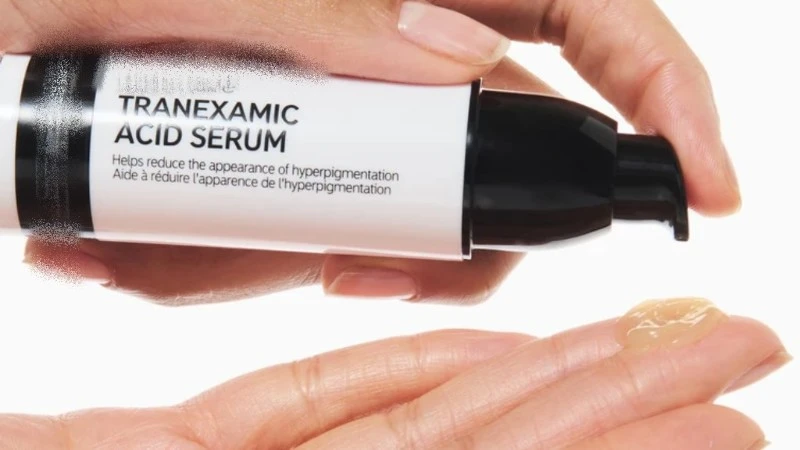
Second, because tranexamic acid has an anticoagulant effect when taken orally, although the transdermal absorption of topical serums is extremely low and theoretically should not affect blood clotting, as a precaution, individuals with a history of bleeding disorders or currently taking anticoagulant medications should consult a doctor before using high-concentration tranexamic acid serums. In addition, it is not recommended to blindly combine tranexamic acid with products that already contain high concentrations of other potent whitening ingredients and are highly irritating, such as high concentrations of retinol or hydroquinone. This is not because the two react chemically, but because the combination of multiple potent ingredients may damage the skin barrier, cause redness, or peeling.
Where to buy the best alpha arbutin powder and tranexamic acid powder?
We sincerely recommend two high-quality skin-brightening and spot-fading ingredients: alpha-arbutin powder and tranexamic acid powder, suitable for formulation development of functional skincare products such as serums, creams, and masks. Our alpha-arbutin powder boasts high purity, excellent stability, and is gentle and non-irritating, making it suitable for long-term use. Tranexamic acid powder precisely improves melasma, acne scars, and post-inflammatory hyperpigmentation; when combined with alpha-arbutin, it forms a multi-pathway spot-fading system, synergistically enhancing its effects. Both ingredients meet industry standards, exhibiting good solubility and high compatibility, facilitating formulation integration. We provide stable supply chain support, flexible minimum order quantities, and third-party quality inspection reports. Contact us at info@kintaibio.com.
