

Amid the surging popularity of efficacy-driven skincare and natural ingredients, the core challenge facing brands has shifted from the question of whether to use plant extracts to how to source an active ingredient that balances scientific validation, supply stability, and cost-effectiveness. Polygonum cuspidatum root extract stands out as a compelling option for B2B clients. Featuring resveratrol and polydatin as its key active constituents, it is backed by robust in vitro and preclinical data demonstrating efficacy in anti-oxidation, anti-inflammation, and protection against photoaging.
Furthermore, thanks to mature extraction and purification technologies, the ingredient can now be mass-produced at purity levels. For companies developing anti-aging serums, antioxidant capsules, or functional skincare formulations, key considerations include the extract's potential to replace standalone resveratrol, its compatibility with existing formulation systems, and the reliability of the supply chain, all of which are critical to successful product commercialization.Contact us at info@kintaibio.com.
What is polygonum cuspidatum root extract?
Polygonum Cuspidatum Root Extract is derived from the rhizome of Polygonum cuspidatum Sieb. et Zucc. (a member of the Polygonaceae family), a plant widely distributed across southern China and Japan; its root has been listed in the Pharmacopoeia of the People's Republic of China since 1977. Phytochemically, the root is rich in various compounds, including stilbenes, anthraquinones, and flavonoids, with resveratrol and polydatin being the most notable active constituents.
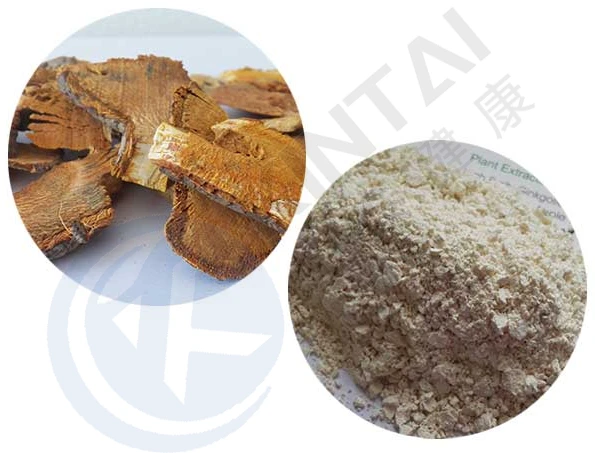
The concentrations of these two substances are significantly higher in the rhizome than in other parts of the plant.In terms of therapeutic effects, the extract has traditionally been used for anti-inflammatory, antibacterial, and hemostatic purposes, as well as for regulating blood lipids. Modern research has further revealed that its active constituents exert antioxidant and anti-inflammatory effects by modulating signaling pathways such as NF-κB and MAPK; additionally, resveratrol, acting as a phytoalexin, has garnered significant attention in studies regarding anti-tumor mechanisms.
How does polygonum cuspidatum root extract work?
The mechanism of action of Polygonum cuspidatum root extract is characterized by the synergistic effects of multiple components acting on multiple targets and pathways. Its core component, resveratrol, inhibits cyclooxygenase and activates the SIRT1 pathway as well as endothelial nitric oxide synthase (eNOS); polydatin influences cholesterol metabolism by regulating PCSK-9 and HMG-R; and emodin acts as a protein tyrosine kinase inhibitor, modulating multiple signaling pathways such as NF-κB, STAT3, and AKT. Regarding anti-angiogenic activity, the extract inhibits VEGF-induced endothelial cell proliferation, migration, and tube formation in a dose-dependent manner; it primarily targets VEGFR2, inhibiting the receptor and downstream JNK phosphorylation, thereby reducing the activation of Erk, Akt, and eNOS.
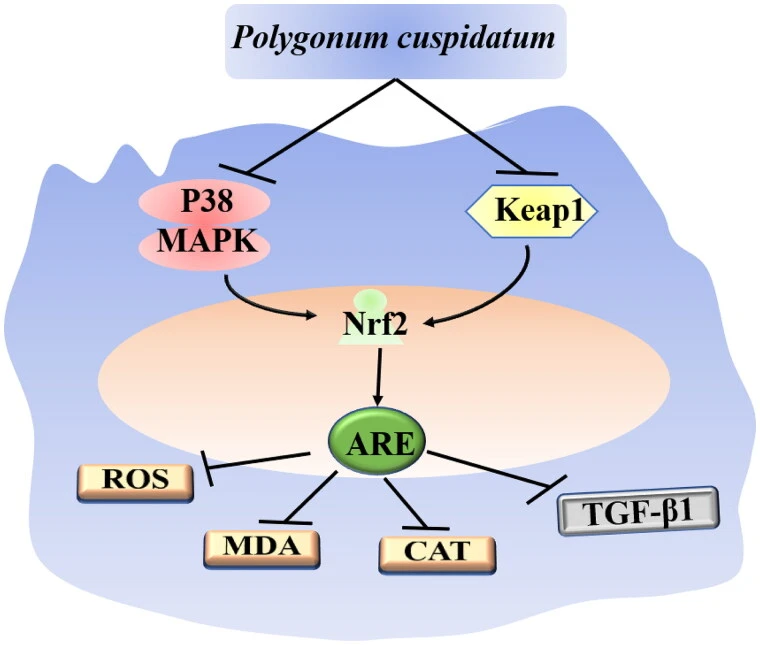
In terms of anti-inflammatory effects and the regulation of bone metabolism, the extract modulates the NF-κB signaling pathway to reduce the release of inflammatory cytokines such as IL-6 and TNF-α, and downregulates RANKL-induced expression of NFATc1, c-Fos, and TRAP, thereby inhibiting osteoclast differentiation. Regarding lipid metabolism, the extract ameliorates hepatic steatosis by regulating the expression of proteins involved in triglyceride metabolism (e.g., p-AMPK, p-ACC, PPARα) and cholesterol metabolism (e.g., LDLR, CYP7A1). This synergistic multi-pathway action constitutes the biological basis that distinguishes Polygonum cuspidatum root extract from resveratrol alone.
What does Polygonum cuspidatum do for the body?
The rhizome of Polygonum cuspidatum is used in traditional Chinese medicine to treat conditions such as inflammation, hyperlipidemia, jaundice, and burns. Modern pharmacological studies indicate that P. cuspidatum and its extracts possess diverse pharmacological activities, including anti-inflammatory, antioxidant, anticancer, and cardioprotective effects. Its active constituents, resveratrol and polydatin, exert anti-inflammatory effects by modulating the NF-κB signaling pathway to reduce the levels of inflammatory cytokines such as IL-6 and TNF-α. Regarding metabolic regulation, the n-butanol and ethyl acetate fractions of P. cuspidatum extract can effectively inhibit pancreatic lipase activity and reduce fat absorption, demonstrating potential for the prevention and treatment of obesity and hyperlipidemia. Polydatin also exhibits hepatoprotective properties, capable of alleviating hepatic steatosis and inhibiting liver fibrosis.
What does polygonum cuspidatum root extract do for skin?
The value of Polygonum cuspidatum root extract in skincare stems primarily from the multifaceted biological activities of its key constituents: resveratrol and polydatin. Regarding antioxidant effects, resveratrol scavenges free radicals and activates the SIRT1 pathway, thereby mitigating UV-induced oxidative damage and delaying photoaging. In terms of anti-inflammatory properties, the extract inhibits the NF-κB signaling pathway and reduces the release of inflammatory cytokines such as IL-6 and TNF-α, helping to alleviate erythema and irritation in sensitive skin. Regarding anti-aging, resveratrol promotes fibroblast proliferation and collagen synthesis while inhibiting collagen degradation by matrix metalloproteinase-1 (MMP-1), thereby improving skin elasticity and reducing fine lines.

Polydatin, the glycoside form of resveratrol, offers superior stability; it can gradually convert into resveratrol within formulations, thereby extending the duration of active efficacy. For B2B clients, Polygonum cuspidatum root extract is suitable for use in anti-aging serums, antioxidant creams, after-sun repair products, and sensitive skin care formulations, serving as a multifunctional botanical active ingredient that combines scientific backing with formulation versatility.
Where to buy the best polygonum cuspidatum root extract powder?
We supply Polygonum cuspidatum extract powder, produced from the plant's rhizomes using established extraction and purification processes. Our product achieves a resveratrol purity of over 98% while retaining synergistic compounds such as polydatin. Backed by GAP-certified cultivation bases, we offer a one-stop service, spanning raw material cultivation, extraction and purification, to end-product formulation support, enabling superior cost efficiency compared to industry standards. Suitable for applications ranging from dietary supplement capsules and functional foods to skincare formulations, the product is available in specifications such as 50%, 98%, and 99%, with OEM and ODM customization options. Each batch undergoes rigorous testing to ensure compliance with target market regulations regarding heavy metals, residual solvents, and microbiological standards. For wholesale inquiries or sample requests, please contact info@kintaibio.com.
FAQ
Q: What is the difference between Polygonum cuspidatum root extract and resveratrol?
A: Polygonum cuspidatum root extract is a multi-component botanical extract, while resveratrol is a single compound. The extract contains resveratrol, polydatin, emodin, and other minor constituents. Resveratrol can also be produced synthetically or extracted from grapes and peanuts. When formulating, the extract offers a broader spectrum of naturally occurring compounds, whereas pure resveratrol offers a standardized single-molecule dosage.
Q: What is the typical resveratrol content in Polygonum cuspidatum root extract?
A: Standardized Polygonum cuspidatum root extract is commonly available in 50%, 98%, and 99% trans-resveratrol concentrations. Lower-standardized grades (10%–30%) retain higher levels of polydatin and other co-occurring compounds. High-purity grades (98%–99%) are produced through column chromatography and crystallization for applications requiring precise dosing.
Q: Is Polygonum cuspidatum root extract approved for use in food and supplements?
A: Regulatory status varies by market. In the EU, resveratrol from Polygonum cuspidatum is approved as a novel food under specific purity and usage conditions. In China, Polygonum cuspidatum itself is listed in the Pharmacopoeia as a medicinal material and is not approved as food ingredient. In the US, it is sold as a dietary supplement ingredient. Buyers should verify local compliance before import.
Q: How should Polygonum cuspidatum root extract be stored and handled?
A: Polygonum cuspidatum root extract should be stored in a cool, dry place away from direct sunlight, ideally at temperatures below 25°C and relative humidity below 60%. Resveratrol is sensitive to light and oxidation; therefore, amber glass or light-resistant packaging is recommended. For bulk industrial supply, keep containers sealed and use within the recommended shelf life, typically 24 months from the date of manufacture.