

In today's fiercely competitive market for functional ingredients, brands face a pivotal challenge: how to identify an ingredient that combines scientific backing, consumer recognition, and a unique selling proposition? While most players battle it out in saturated market segments, an ingredient rooted in the ancient Ayurvedic tradition yet validated by modern clinical research is quietly rising to prominence: Holy Basil extract. Not only is it a star molecule among adaptogenic herbs, but its multifaceted benefits-spanning mood support, metabolic regulation, and immune balance precisely address the modern consumer's urgent desire for holistic mind-body wellness. For B2B decision-makers seeking product upgrades or breakthroughs with new concepts, gaining insight into the commercial potential of Holy Basil extract could well mark the starting point of their next growth trajectory. Contact us at info@kintaibio.com.
What is holy basil tulsi extract?
Holy Basil Tulsi extract is derived from the leaves, stems, and seeds of the Ocimum tenuiflorum plant. Used for over 3,000 years in traditional Indian Ayurvedic medicine, it is classified as an adaptogen an herb that helps the body cope with stress and restore homeostatic balance. Key bioactive constituents of the extract include eugenol, rosmarinic acid, ursolic acid, and various flavonoids. From a commercial application perspective, the value of Holy Basil extract is being re-evaluated; preliminary human studies suggest potential benefits in alleviating perceived stress, improving sleep quality, and supporting blood glucose metabolism. Furthermore, its anti-inflammatory and antioxidant properties offer unique formulation concepts for skincare products and functional foods.
holy basil extract for anxiety

The use of Holy Basil extract for anxiety management is rooted in the long-standing Ayurvedic tradition of classifying it as an adaptogen an herb valued primarily for helping the body restore homeostasis under stress, rather than acting as a simple sedative. Interest from the modern functional ingredients market stems precisely from this distinctive positioning: unlike synthetic ingredients with singular mechanisms of action, the eugenol, rosmarinic acid, and various flavonoids found in Holy Basil extract are believed to work synergistically across multiple dimensions, such as regulating the stress response and supporting emotional balance.
For B2B clients seeking to operationalize the concept of mind-body integration, it offers an ingredient choice that combines a narrative of ancient wisdom with the contemporary trend surrounding adaptogens. Although its precise mechanisms of action and clinical efficacy require further rigorous study, Holy Basil extract has already demonstrated significant commercial potential as a component for emotional support in formulations.
holy basil extract for glutes
Regarding the relationship between holy basil extract and gluteal shaping, some fitness enthusiasts claim that the extract-when combined with training and a proper diet-aids in gluteal growth; however, they also acknowledge a lack of observable, significant changes, suggesting that any perceived benefits may stem more indirectly from an improved mindset. Additionally, a dietary supplement marketed for the legs, buttocks, and hips combines holy basil extract with ingredients such as ashwagandha and rhodiola, claiming potential benefits for weight management, though the specific contribution of holy basil within this blend cannot be isolated. In terms of its properties, research on oral holy basil extract has focused primarily on metabolic markers and stress regulation, while systematic evidence linking it directly to localized fat distribution or muscle growth is currently lacking.
holy basil extract for hyperpigmentation
Regarding the link between Holy Basil extract and pigmentation, available scientific data suggests a scenario where there are promising signals at the mechanistic level, yet validation at the application level is still pending. Existing studies indicate that ethanolic extracts of Holy Basil leaves can inhibit key regulators of melanogenesis in cell models by modulating the ERK/CREB–MITF signaling axis; at specific concentrations, their overall anti-melanogenic efficacy approaches that of the positive control, arbutin.
Meanwhile, some commercial suppliers market the ingredient with claims of whitening and improving dark spots and dullness, promoting it based on its melanin-inhibiting properties. For B2B clients interested in this area, Holy Basil extract is currently best evaluated as a candidate ingredient with a distinctive mechanism of action, rather than as a fully validated solution for pigmentation management.
holy basil extract for melasma
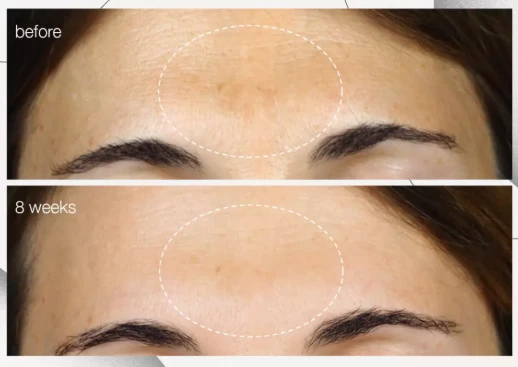
Regarding the link between Holy Basil extract and melasma, the current body of evidence mirrors the general landscape of research on pigmentation: while there are promising signs at the mechanistic level, clinical validation specifically targeting melasma is lacking. Melasma arises from a complex interplay of factors-including abnormal melanocyte activity, angiogenesis, inflammation, and photodamage-making effective intervention with a single ingredient inherently challenging. From a mechanistic perspective, polyphenols in Holy Basil extract have demonstrated the ability to inhibit melanogenesis in cell models by modulating the CREB–MITF signaling axis; at specific concentrations, their overall anti-melanogenic efficacy approaches that of arbutin. Consequently, some ingredient suppliers market the extract with claims of whitening and the ability to improve dark spots and dullness.
Where to buy the best holy basil tulsi extract powder?
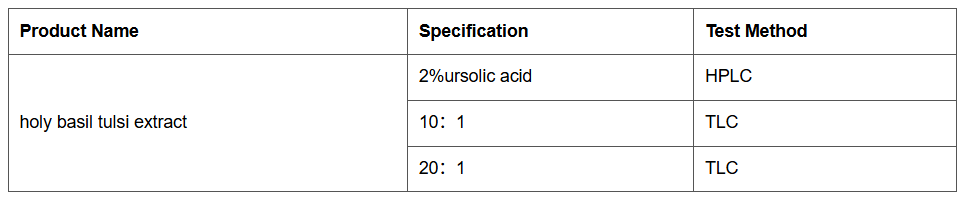
We have a Holy Basil Tulsi extract series, offering three precise specifications to meet the diverse formulation needs of B2B clients. The 2% Ursolic Acid specification is verified via HPLC, ensuring accurate quantification and batch-to-batch consistency; it is ideal for functional foods, mood-support supplements, and skincare formulations that require specific active ingredient levels. The 10:1 and 20:1 specifications are verified via TLC, offering a cost-effective option while maintaining quality control-suitable for concept-driven ingredients, blended products, and projects where cost-efficiency is a priority. This range spans the spectrum from high-end, precision-targeted products to mass-market applications, allowing clients to make flexible choices based on desired product efficacy, budget constraints, and regulatory requirements.Contact us at info@kintaibio.com.
FAQ
Q: What is holy basil tulsi extract good for?
A: 1.Holy basil tulsi extract is traditionally used as an adaptogen to help the body manage stress and support emotional balance. It also contains active compounds like ursolic acid, eugenol, and rosmarinic acid, which are being explored for antioxidant, anti-inflammatory, and skin-brightening applications.
Q: What is the difference between 2% ursolic acid and 10:1 / 20:1 holy basil extract?
A: The 2% ursolic acid specification is a standardized extract quantified by HPLC, meaning the active compound content is precisely measured. The 10:1 and 20:1 ratios are TLC-identified extracts based on herb-to-extract concentration, offering a more cost-effective option for formula development.
Q: Does holy basil extract help with hyperpigmentation or melasma?
A: Preliminary cell studies suggest holy basil extract may help inhibit melanin production through the CREB–MITF pathway, with effects approaching arbutin at certain concentrations. However, clinical evidence for hyperpigmentation and melasma is still lacking, so it is best positioned as a differentiated supporting ingredient rather than a stand-alone solution.
Q: Can holy basil extract be used for glutes or body shaping?
A: There is currently no solid scientific evidence supporting holy basil extract for glute growth or localized fat reduction. Some anecdotal user reports and combination supplements mention it, but its role cannot be isolated from other ingredients or lifestyle factor.