

Natural flavonoids are widely found in fruits, vegetables and medicinal plants. As well-researched botanical ingredients for functional foods and dietary supplement formulations, they keep attracting formulators and end consumers thanks to their natural antioxidant properties. Among various flavonoid raw materials, fisetin and quercetin are frequently compared. The two share similar molecular structures yet differ greatly in physicochemical traits, application scenarios and formulation performance. Many brands and R&D specialists evaluate standalone use or combined blends of the two when developing new products.
As a professional manufacturer and supplier of plant extracts, Healthkintai® consistently supplies high-purity fisetin powder and quercetin powder for dietary supplement clients worldwide. Feel free to contact us at health@kintaibio.com.
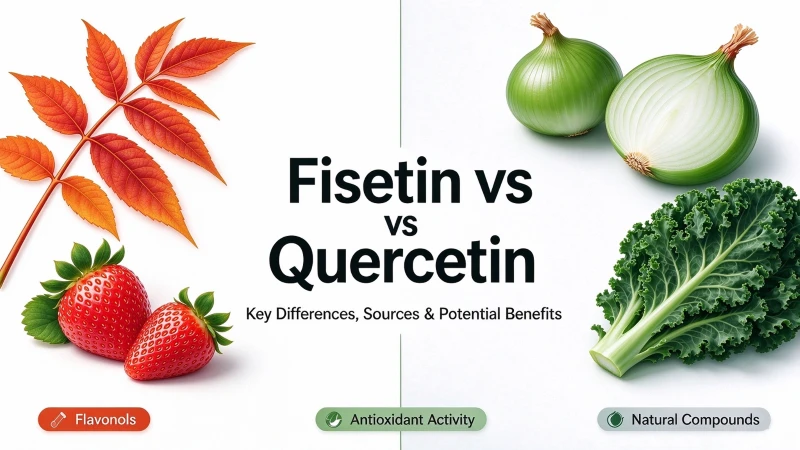
Fisetin Vs Quercetin:Source
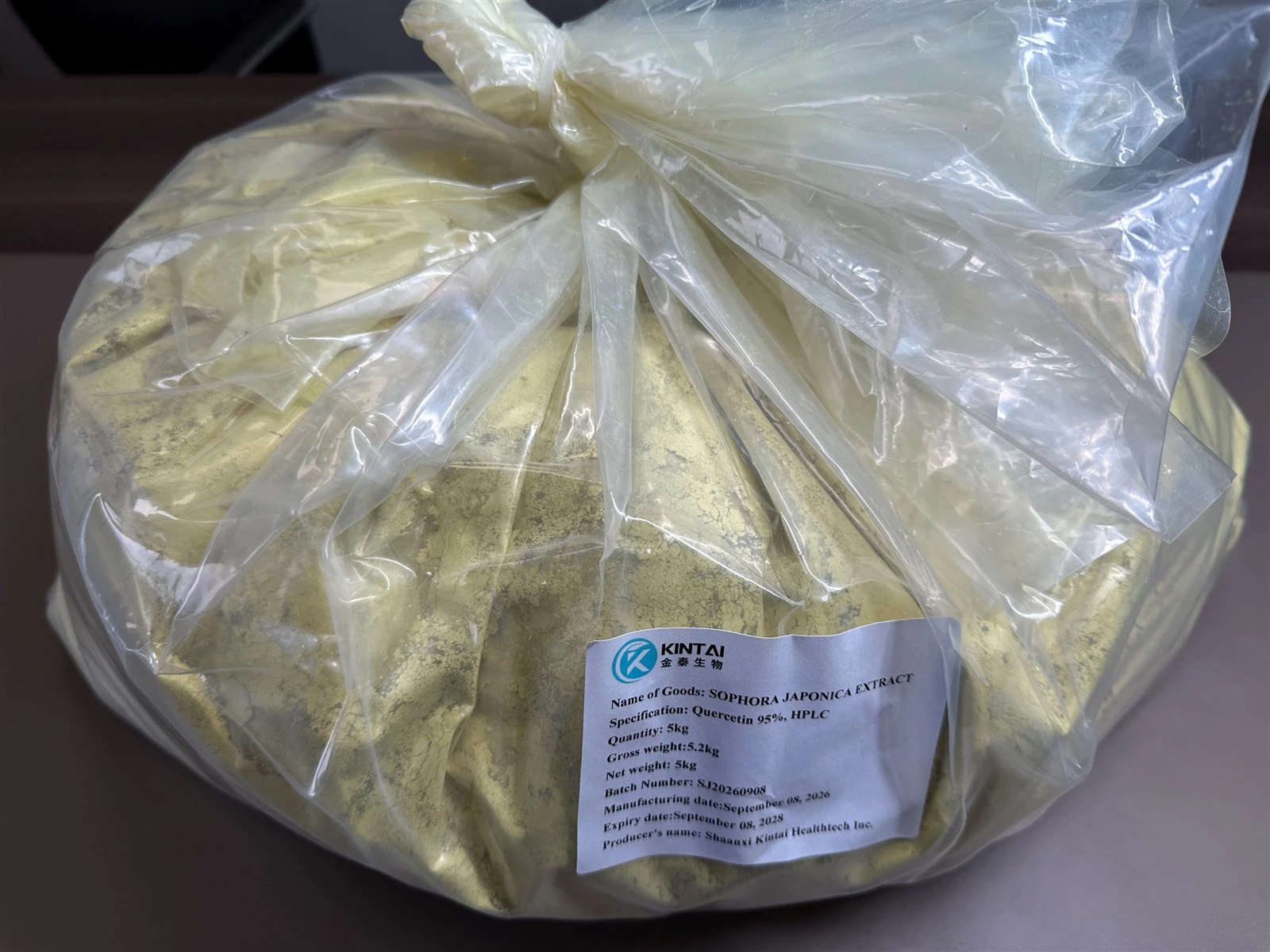
What Is Quercetin?
Quercetin is a well-studied classic flavonol, naturally abundant in common fruits and vegetables including onions, apples, grapes and broccoli, and can be consumed in small quantities through daily diets. Within the industrial supply chain, the extract from pagoda tree buds (dried flower buds of Sophora japonica) serves as the most mainstream and cost-effective source of quercetin. Healthkintai® leverages mature extraction, hydrolysis and purification processes to steadily enrich the target compound and produce high-purity quercetin powder in bulk.
The standard commercial grades are 95% and 98% assayed by HPLC. Featuring a stable molecular structure, quercetin's industrial production route has been validated over years with controllable processes and consistent supply. It ranks among the most widely adopted flavonoid raw materials for dietary supplements and functional ingredients across the global market.
What Is Fisetin?
Fisetin is also a natural polyphenol belonging to the flavonol family. It naturally occurs in a wide range of fruits, vegetables and woody plants including strawberries, mangoes, persimmons and smoketree. Commercially available fisetin powder is mainly extracted and refined from smoketree. Healthkintai supplies high-purity powder with a typical specification of ≥98% by HPLC, suitable for applications in dietary supplements and functional raw materials.
Both fisetin and quercetin fall under flavonols and share highly similar molecular skeletons. Their key difference lies in the hydroxyl substitution on the A-ring: quercetin bears a 5-hydroxyl group, while fisetin does not. This seemingly minor structural variation alters molecular polarity, lipophilicity and membrane permeability, resulting in distinct binding affinity to biological targets, intestinal absorption kinetics, in-vivo metabolic pathways and research priorities.
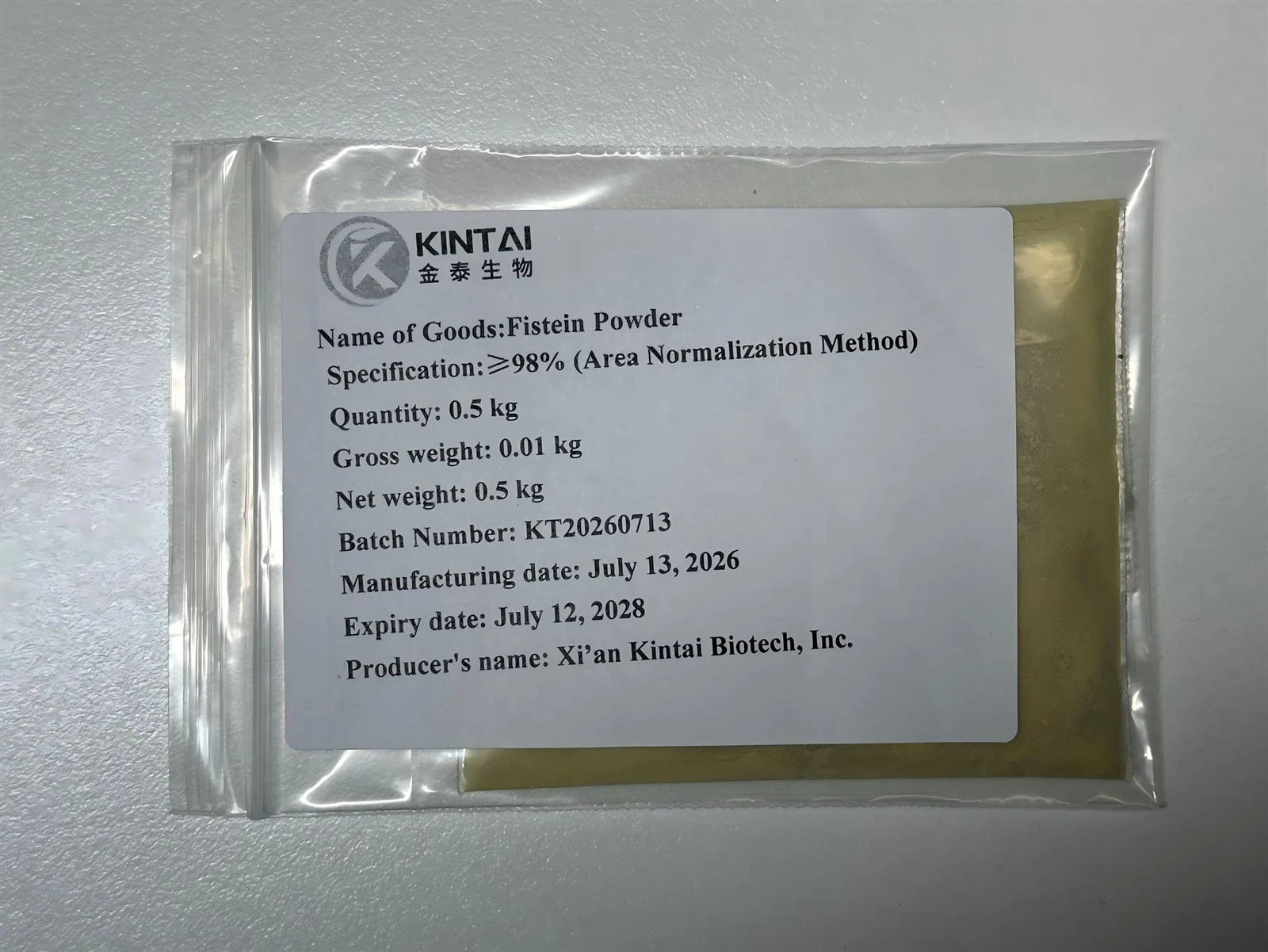
Note: Raw material description: We can provide fisetin powder and quercetin powder of different purity specifications. Each batch is accompanied by a complete COA test report and supports third-party retesting.
Fisetin Vs Quercetin: Senolytic's Effectiveness
When selecting only one core dimension to distinguish the research positioning of Fisetin and Quercetin, it lies in their differing potential as senolytics.
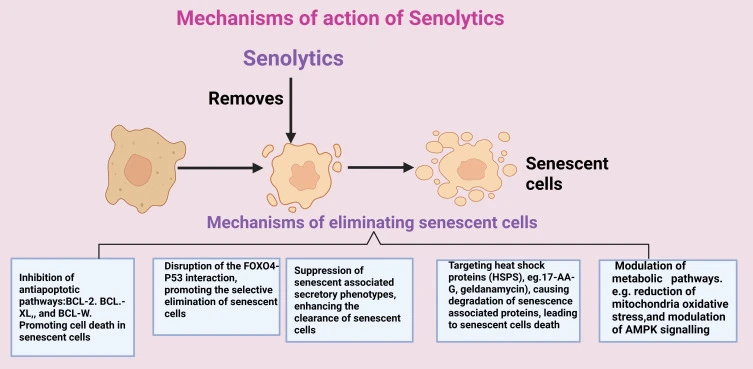
Senescent cells are characterized by permanent cell cycle arrest while failing to undergo normal programmed cell death. These cells continuously secrete pro-inflammatory signaling molecules and matrix-degrading enzymes, creating a persistent low-grade chronic inflammatory microenvironment within body tissues. The key research attribute of senolytic agents is their ability to selectively target these "zombie cells". Among a broad range of natural flavonoids, fisetin attracts unique research attention in this field.
In a 2018 screening study of 10 flavonoids conducted by the Kirkland Lab, fisetin was identified as the most potent single compound for senescent cell clearance in in vitro tests. Its mechanism of action mainly involves inhibition of the PI3K/AKT/mTOR survival signaling pathway, a critical axis that enables senescent cells to resist apoptosis. Meanwhile, fisetin modulates the expression of Bcl-2 family proteins, coordinating at multiple molecular checkpoints to drive senescent cells toward apoptosis. Multiple preclinical cellular and tissue studies indicate that fisetin, as a standalone active ingredient, demonstrates stronger in vitro performance in senescent cell clearance compared to quercetin used alone.
Fisetin Vs Quercetin: Supplement Uses
Fisetin and quercetin both exhibit antioxidant and anti-inflammatory properties, yet they differ markedly in product positioning within the dietary supplement sector.
Quercetin is a well-established, widely used bulk nutraceutical ingredient with a large market footprint. It helps support immune homeostasis, ease seasonal discomforts, maintain vascular health, and aid post-exercise physical recovery. Backed by extensive human research data, it is suitable for long-term daily intake, with stable supply chains and cost-effective raw material pricing.
Fisetin, by contrast, is a premium niche ingredient targeted at healthy aging. It supports cellular health and cognitive function and can cross the blood-brain barrier. Human research on fisetin remains relatively limited, and commercially available products often recommend periodic cyclic intake. Its extraction process is more sophisticated, resulting in a substantially higher raw material cost.
|
Comparison Dimension |
Fisetin |
Quercetin |
|
Core Functional Positioning |
Helps support cellular health, activates the Nrf2 pathway, supports cognitive function and helps modulate inflammatory status in the body |
Supports immune homeostasis, eases seasonal discomforts, maintains vascular health, aids post-exercise body relief and helps modulate inflammatory status |
|
Clinical Evidence Profile |
Abundant cellular and animal studies; limited human research with small sample sizes, mostly short-term trials; lack of large-scale long-term human data |
Decades of extensive human research with a well-established evidence base; sufficient safety data for long-term intake |
|
Recommended Intake Protocol |
Daily maintenance: 100–300 mg/day. Periodic wellness regimen: 500–1000 mg, 1–2 times weekly on a cyclic basis. Continuous high-dose daily intake is not advised |
Daily maintenance: 500–1000 mg/day, suitable for continuous daily supplementation; no cyclic intermittent intake required |
|
Target Consumer Groups |
High-net-worth individuals aged 45+ focusing on healthy aging and cognitive support; niche vertical audience with smaller market size |
Multi-age general consumers; ideal for those concerned with seasonal discomforts, vascular care, exercise recovery and basic immune support; large market base |
|
End-Product Strategy |
Positioned as high-priced, high-margin niche single ingredients; widely formulated in healthy-aging blends. Premium formats include fisetin phospholipid complex and liposomal fisetin |
Covers full price range with affordable baseline SKUs for volume sales. Premium variants: liposomal quercetin, quercetin phospholipid complex. High market homogenization and intense competition |
|
Classic Co-formulation Partners |
||
|
Safety & Risk Warnings |
Acceptable safety profile for short-term intake. High doses may cause gastrointestinal discomfort. It may affect CYP450 enzyme activity with potential interactions with anticoagulants and other medications. Long-term human safety data is insufficient |
Good tolerability at regular dosages. Doses above 1500 mg/day may trigger GI upset or headaches. It also impacts CYP450 enzymes; warnings for potential drug interactions are required |

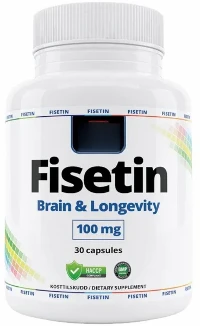
Can You Take Quercetin and Fisetin Together?
Quercetin and fisetin can be taken together, featuring well-complementary biological action pathways. Fisetin activates the Nrf2 antioxidant signaling pathway to boost the body's cellular antioxidant defense capacity, while quercetin modulates the NF-κB pathway to ease excessive inflammatory responses. Proper combined intake supports synergistic antioxidant effects and maintains inflammatory homeostasis in the body, yet daily total dosage must be strictly controlled, and long-term high-dose supplementation is not recommended.
This content serves solely as nutritional information and shall not replace medical diagnosis or treatment. Individuals with underlying liver or kidney conditions, those who are pregnant or breastfeeding, or anyone taking prescription medications such as anticoagulants and hypoglycemic drugs, must consult a qualified healthcare practitioner prior to starting such nutritional supplements to assess personal suitability and avoid potential ingredient interaction risks.
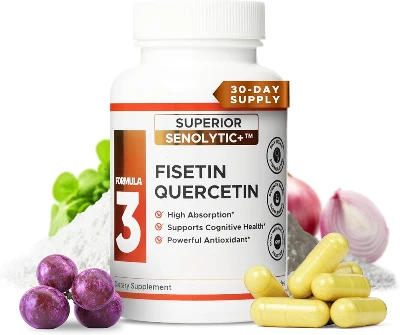
Quercetin and Fisetin for Sale
Healthkintai® is deeply engaged in the plant extract industry, integrating R&D, production and sales as a professional manufacturer of plant extracts. If you are looking for a reliable Chinese raw material supplier with consistent quality and dependable delivery, we are your ideal choice.
Our fisetin powder is extracted from Cotinus coggygria, while quercetin powder is sourced from pagoda tree flower buds (Sophora japonica). Adopting natural extraction processes, our products contain no extra artificial additives. Hazardous organic solvents are strictly excluded during production, with continuous monitoring of solvent residue levels to ensure purity and safety of finished products.
We own a standardized manufacturing plant operating under the GMP quality management system. Each batch comes with a COA certificate of analysis for traceable quality. We also offer diversified custom services including content specification adjustment, particle size modification, small-batch trial orders and custom packaging to flexibly meet varied project requirements of clients.
Please feel free to contact us at health@kintaibio.com for samples, quotations or technical documentation. We look forward to cooperating with you.
