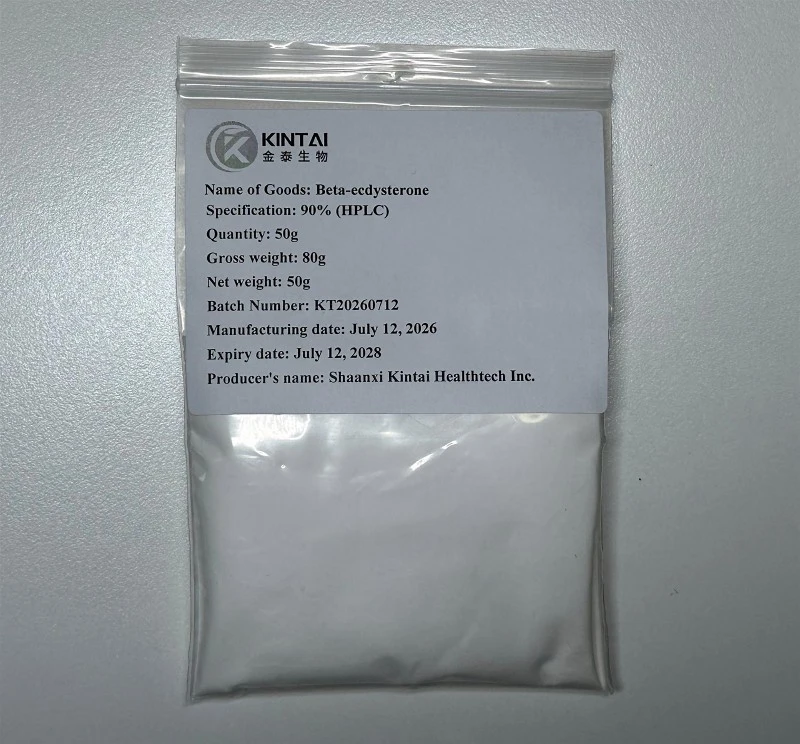
Within the category of phytoecdysteroids, ecdysterone (also known as β-ecdysterone/20-hydroxyecdysone) and turkesterone are frequently discussed together, and these two ingredients are often confused by formulators and brand buyers. Both belong to the broader ecdysteroid family, yet they differ substantially in botanical source, molecular structure, available research literature support, supply chain stability, assay complexity, and global regulatory compliance requirements. This article systematically outlines their key distinctions to serve as an objective reference for brand formulation selection and raw material supplier evaluation.
Healthkintai® specializes in plant extracts. We supply Cyanotis arachnoidea extract beta ecdysterone powder with specifications ranging from 1% to 98%. Feel free to contact us at health@kintaibio.com.
Ecdysterone Vs Turkesterone: Chemical Structure
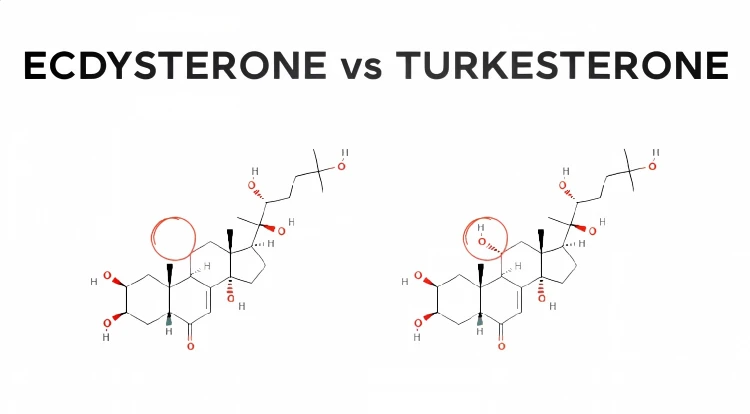
Ecdysterone and Turkesterone belong to the ecdysteroid family and share an identical steroid nucleus, differing in the arrangement of hydroxyl substituents.
Ecdysterone, also known as 20-hydroxyecdysone (20E, CAS 5289-74-7), bears hydroxyl groups at positions 2, 3, 14, 20, 22 and 25. Turkesterone (CAS 41451-87-0) has an additional 11α-hydroxyl group on the same steroid skeleton.
While this structural difference appears minor, it alters molecular polarity and receptor-binding properties, further affecting their natural distribution in plants and the difficulty of industrial extraction.
Ecdysterone Vs Turkesterone:Natural Source
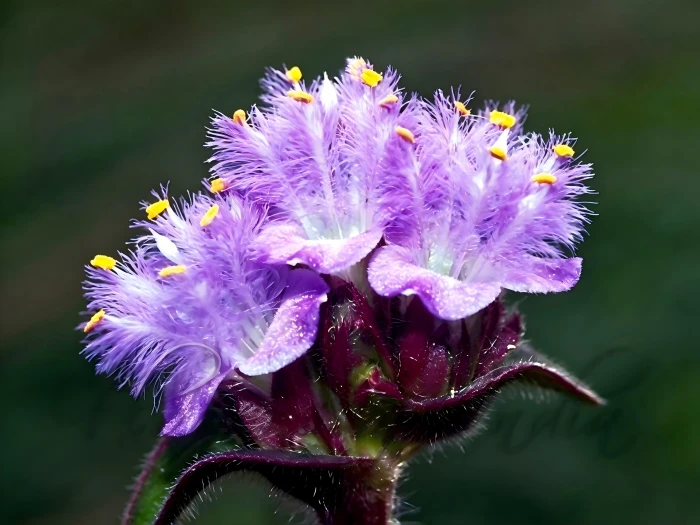
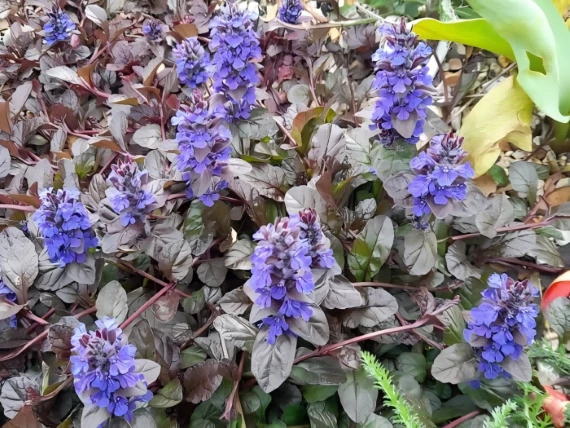
Ecdysterone and Turkesterone are both phytoecdysteroids with distinctly different natural source profiles. The former occurs widely across many plant species, and the primary industrial raw material is the high-content root of Cyanotis arachnoidea from Yunnan, China. The latter has an extremely narrow natural distribution; its commercial source is mainly Ajuga turkestanica, native to high-altitude mountainous regions in Central Asia. There are substantial differences between the two in terms of distribution range, harvested plant part, raw material content and supply chain characteristics.
|
Comparison Item |
Ecdysterone |
Turkesterone |
|
Primary Commercial Source Plant |
Cyanotis arachnoidea (family Commelinaceae), mainly extracted from roots; also found in Rhaponticum carthamoides and other botanicals |
Ajuga turkestanica (family Lamiaceae), harvested from aerial stems and leaves |
|
Native Distribution |
Widely distributed across hundreds of plant species from multiple families. Industrial raw materials are primarily cultivated in Yunnan and mountainous areas of Southwest China |
Very limited distribution, mainly found in high-altitude arid mountain zones of Central Asia. Ajuga turkestanica serves as the main enriched species |
|
Harvested Plant Part |
Roots (roots of Cyanotis arachnoidea have relatively high accumulation) |
Aerial parts (stems and leaves) |
|
Raw Material Content |
Dried roots of Cyanotis arachnoidea contain approximately 4–5% β-ecdysone. Spinach, quinoa and other plants only carry trace amounts and are not suitable for industrial extraction |
Dried Ajuga turkestanica contains roughly 2% turkesterone, and naturally coexists with multiple phytoecdysteroids |
|
Co-occurring Components |
Dominated by β-ecdysone, with minor acetyl ecdysone; almost no turkesterone |
One plant contains turkesterone, ecdysterone and various other phytoecdysteroids, usually as a complex mixture |
|
Supply Chain Features |
Mature large-scale cultivation and extraction in China. High-purity monomers (95%, 98% by HPLC) can be produced stably |
Raw materials rely on botanical resources from Central Asia with limited supply. Most commercial extracts are standardised to total phytoecdysteroids as complex blends |
Ecdysterone Vs Turkesterone:Human Clinical Trials
Turkesterone has demonstrated stimulatory effects on protein synthesis in mouse and rat models, with some metrics even being compared to anabolic agents. The problem is that the track record for extrapolating anabolic findings from animals to humans is poor. To date, no published human randomized controlled trials (RCTs) have established definitive effects of Turkesterone on muscle mass, strength, or any clinical endpoints. A 2024 placebo-controlled trial randomized 31 active men and women to either a 500 mg/day Turkesterone group or a placebo group for 4 weeks, with body composition assessed via DXA. No between-group differences were observed in body weight, fat-free mass, fat mass, or body fat percentage.
Ecdysterone presents a completely different picture. The 10-week resistance training intervention study published by Isenmann et al. in Archives of Toxicology (2019) recruited participants receiving an Ecdysterone-containing supplement. The results showed statistically significant increases in muscle mass and one-repetition maximum bench press strength in the high-dose group (48 mg/day), with no elevations in hepatic or renal toxicity biomarkers. The mechanistic interpretation of this study has also been supported by subsequent literature: the anabolic activity of Ecdysterone is thought to be mediated primarily via estrogen receptor beta (ERβ), activating the downstream PI3K/Akt signaling pathway in an androgen receptor-independent manner.
Ecdysterone Vs Turkesterone:How to Choose?
If your brand aims to develop mass-produced, consistent products with robust safety evidence, Ecdysterone is the preferred choice. Well-established human clinical data, stable raw material supply and controllable costs make it suitable for conventional sports nutrition dietary supplements, skincare formulations and aquafeed recipes.
For brands focusing on cutting-edge concepts to develop premium niche product lines, Turkesterone may be considered. However, its limitations must be acknowledged in advance: unstable raw material supply, high procurement costs and insufficient human efficacy data, which lead to greater market validation pressure after product launch.
Combination formulations are also available on the market, pairing Ecdysterone with Turkesterone to balance proven efficacy foundations and novel product positioning. Nevertheless, raw material quality and testing costs require thorough evaluation prior to formula development.
Beta Ecdysterone for Sale
Cyanotis arachnoidea is the preferred raw material for industrial extraction of ecdysterone. Large-scale and standardized cultivation has been achieved domestically, free from the climatic and geopolitical constraints of overseas origins, enabling stable year-round supply and making it the core global source of ecdysterone raw material. As a professional plant extract manufacturer, Healthkintai® offers Cyanotis arachnoidea ecdysterone across a full purity range from 1% to 98% to meet diverse industry demands. Among these, high-purity grades of 90%, 95% and 98% are top-selling products in the market.
For quality control, production complies with GMP guidelines. Heavy metals, residual solvents and other critical parameters are strictly monitored. A COA certificate is available for every batch, and customer sample testing is supported. Applications are clearly segmented: low-purity grades are mostly used in aquaculture; high-purity grades including 90%, 95% and 98% are widely adopted in dietary supplements, sports nutrition and cosmetics.
Hot-selling high-purity grades are kept in stock. We accept small-batch trial orders as well as bulk orders, flexibly supporting brands through the full cycle from R&D sampling to mass production. Please contact us at health@kintaibiuo.com for samples, detailed technical documents (TDS/SDS) or custom quotations.