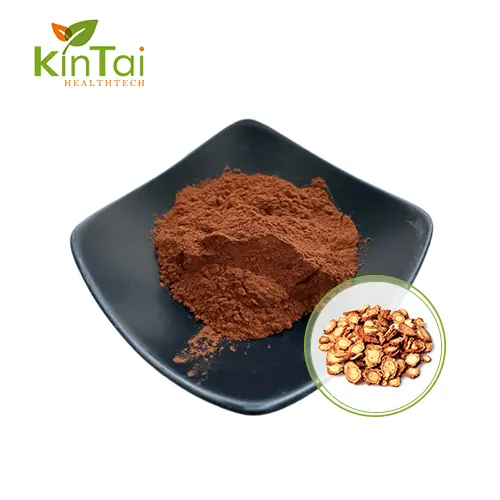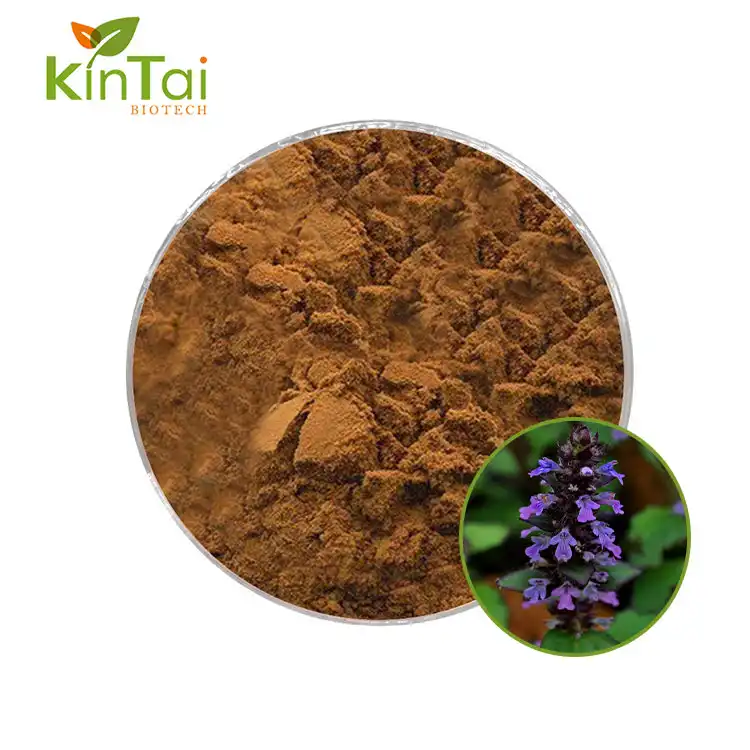
What's the uses of Aconite Root Extract?
2025-10-30 11:04:06
Aconite Extract Overview
Aconite extract is derived from plants of the genus Aconitum in the family Ranunculaceae. Its main active components are diester-type diterpenoid alkaloids such as aconitine. These components possess significant pharmacological activity and are primarily used for anti-inflammatory and analgesic purposes.
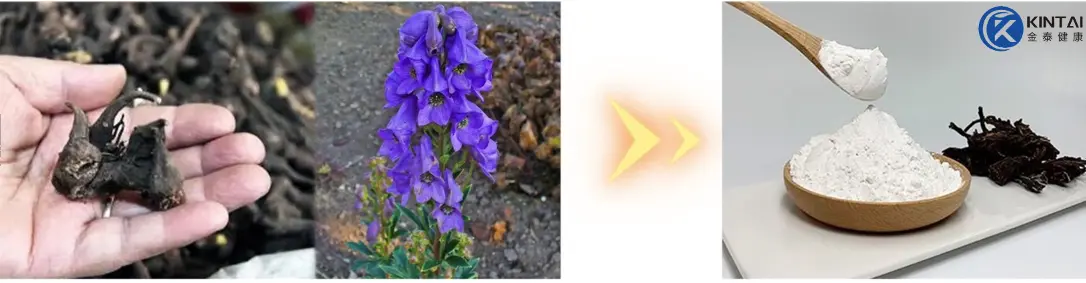

However, aconite extract is extremely toxic. the toxic dose of aconitine is close to the therapeutic dose. Modern research, while exploring its cardiotonic, analgesic, and anti-inflammatory mechanisms, also places great emphasis on its safety and quality control. Aconite extract with high aconitine content is a main product of Kintai. We employ advanced process development and rigorous quality control. Please feel free to contact us at health@kintaibio.com.
Why is Aconite Root Aconitum Kusnezoffii Extract Toxic?
The core active ingredients of aconite extract are diterpenoid alkaloids, which can be mainly divided into two categories based on their chemical structure and toxicity: highly toxic diester-type diterpenoid alkaloids (such as aconitine, hypoaconitine, and neoaconitine), and monoester-type alkaloids (such as benzoylaconitine) whose toxicity is significantly reduced after hydrolysis.

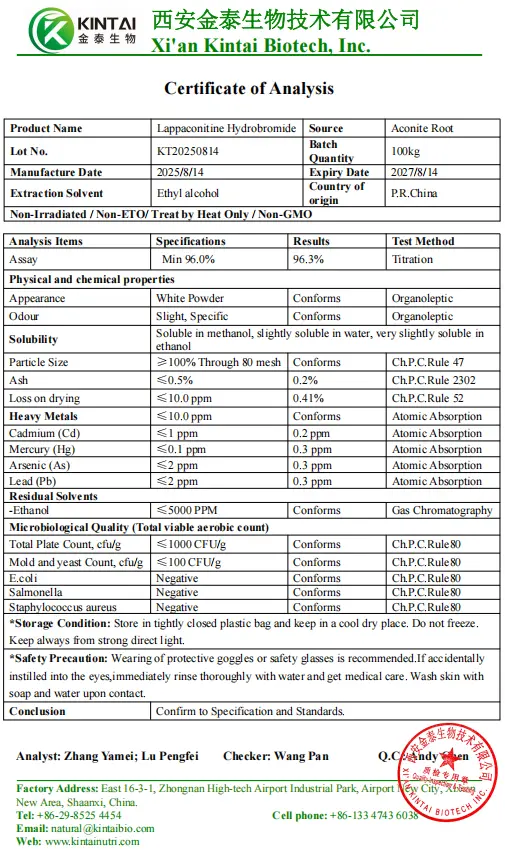
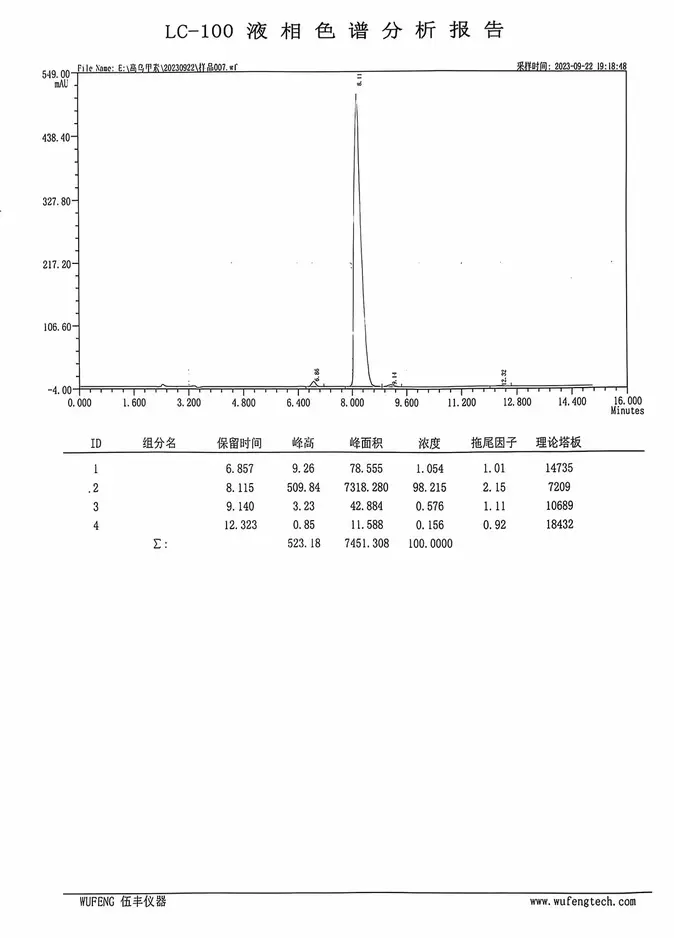
Through standardized processes, we precisely control the content and ratio of the three key diester-type alkaloids. This results in highly stable quality across batches and a purity of 96% for lamivudine hydrobromide, thus ensuring consistent efficacy and safety.
Aconite Root Extract Uses
1. Neuralgia: Diterpenoid alkaloids in aconite (especially aconitine) have an initial stimulating effect followed by paralysis of the nervous system. They act on sodium ion channels, blocking nerve impulse transmission, thus producing significant local anesthesia and analgesia.
2. Facial Paralysis: The local stimulation and nerve-paralyzing effects of its active ingredients may help reduce nerve inflammation and edema, and relieve muscle spasms, but it is rarely used alone in modern clinical practice for this condition.
3. Joint Pain: Aconite extract has strong anti-inflammatory and analgesic effects, inhibiting the release of inflammatory factors, thereby relieving joint pain and swelling caused by rheumatoid arthritis, osteoarthritis, etc.
4. Gout: Its analgesic and anti-inflammatory mechanisms are also applicable to relieving the acute symptoms of gouty arthritis, providing rapid pain relief by inhibiting the inflammatory response and paralyzing local nerves.

5. Inflammation: Studies have shown that components such as aconitine can inhibit cyclooxygenase (COX) activity and reduce the production of inflammatory substances such as prostaglandins, exhibiting a clear anti-inflammatory effect.
6. External Injuries: Strictly prohibited for use on broken wounds, otherwise its highly toxic components may be absorbed in large quantities through the wound, causing poisoning.
7. Cardiac Problems: Aconitine has a complex and strong dual effect on the heart. Small doses can temporarily stimulate the vagus nerve and slow the heart rate; however, the therapeutic dose is very close to the toxic dose, and even a slight overdose can lead to sustained activation of sodium ion channels in myocardial cells, causing fatal ventricular arrhythmias (such as ventricular tachycardia and ventricular fibrillation).
(Reference:NIH National Library of Medicine)
Click here to get more information>>>
Side effects of Aconite Root Extract
1. Primary Principle: Strict Professional Guidance
Self-use is strictly prohibited. All applications must be used under the guidance of a traditional Chinese medicine practitioner based on syndrome differentiation and treatment, and with a prescription. Ensure the use of qualified products with standardized processing methods; avoid using raw products.
2. Key Measures: Strict Dosage Control
Follow the principle of "starting with a small dose and gradually increasing," strictly adhere to the maximum dosage prescribed by the doctor, and do not arbitrarily increase the dosage due to poor efficacy.
3. Important Contraindications: Identify Population and Combinations
Contraindicated in pregnant women, those with yin deficiency and yang excess, and patients with heart disease. Pay attention to contraindications; traditionally, it should not be used concurrently with Pinellia ternata, Trichosanthes kirilowii, or Fritillaria cirrhosa.
4. Warning Signs: Recognize Early Signs of Poisoning
If symptoms such as numbness of the lips or limbs, dizziness, palpitations, nausea, or vomiting occur, immediately stop taking the medication and seek emergency medical attention.

Advantages and Market Positioning
1. Non-addictive: As a non-opioid analgesic, it does not act on central opioid receptors, thus avoiding the addictive and dependence risks associated with drugs like morphine and pethidine. It is an important alternative to opioids in the three-step analgesic ladder for cancer pain and postoperative analgesia.
2. Potential Analgesia: Its analgesic effect is powerful, suitable for moderate to severe pain, filling the market gap between nonsteroidal anti-inflammatory drugs (NSAIDs) (which have weaker effects) and opioids (which are addictive).
3. Market Positioning: Lappaconitine Hydrobromide is primarily available in single-ingredient injections and tablets for moderate to severe acute and chronic pain. Simultaneously, as a high-quality active pharmaceutical ingredient, it is increasingly being used by pharmaceutical companies to develop novel compound formulations and topical dosage forms, aiming to provide more efficient, safe, and non-addictive modern analgesic solutions. Companies like Healthkintai® are providing high-quality, controllable raw material support for this innovation at the upstream of the industry chain.

KINTAI High-quality Aconite Root Aconitum Kusnezoffii Extract
Healthintai® is committed to being your reliable supply chain partner. Through standardized aconite extract and high-purity Lappaconitine Hydrobromide, we provide end-to-end quality control and a stable supply for your new drug development and dosage form improvement, from source to finished product. This lays a solid foundation for jointly developing better non-addictive analgesic solutions.