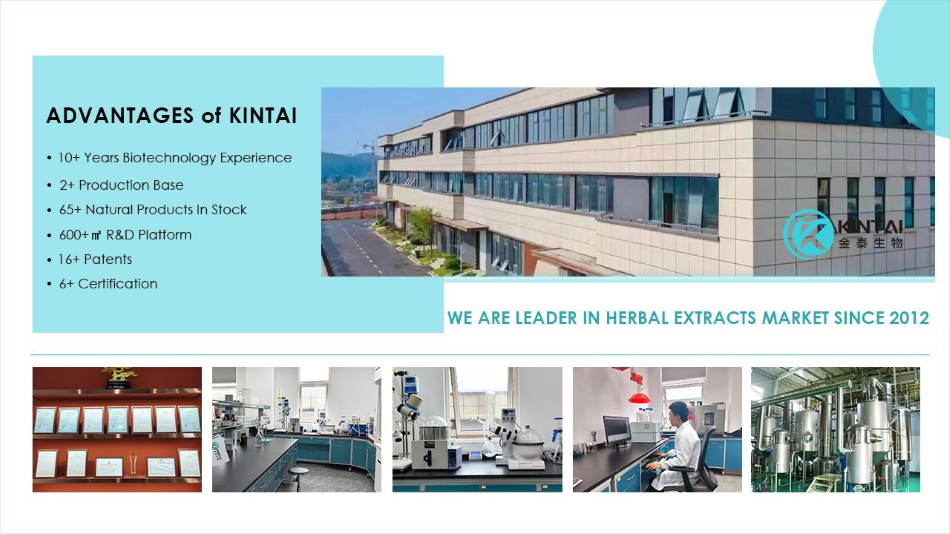
In the increasingly competitive functional skincare market, pigmentation remains a core pain point for end consumers. From melasma and post-inflammatory hyperpigmentation to solar lentigines, traditional whitening ingredients often face limitations such as slow onset of action, high irritation, or poor stability. The emergence of tranexamic acid is reshaping the professional understanding of this field. For B2B clients seeking differentiated product lines, incorporating TXA into their formulation matrix means providing the market with a clinically validated, widely applicable, and high-value solution aligned with the trend towards precision skincare.Contact us at info@kintaibio.com.
What is tranexamic acid?
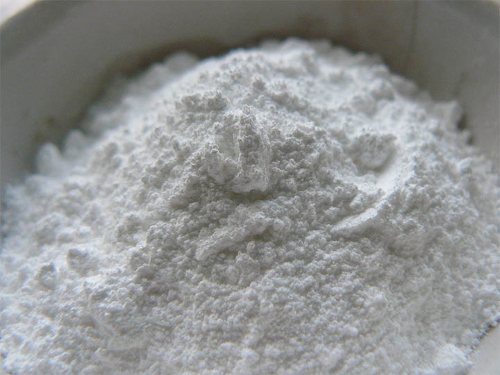
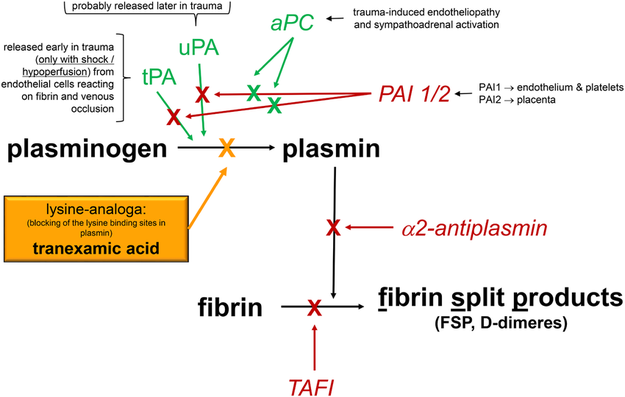
Tranexamic acid is a synthetic lysine derivative first discovered by Japanese pharmacologists in the 1960s. While initially widely used medically as a hemostatic agent, researchers later unexpectedly discovered its remarkable skin-whitening effects. Specific functions include improving various pigmentation problems such as melasma, post-inflammatory hyperpigmentation, sunspots, and age spots.
Unlike traditional tyrosinase inhibitors, tranexamic acid powder is gentler and less irritating, making it particularly suitable for sensitive skin and stubborn pigmentation problems like melasma. Furthermore, it also has auxiliary anti-inflammatory and skin barrier-repairing effects.
Is tranexamic acid good for discoloration?
Tranexamic acid is indeed very effective in improving pigmentation, especially in treating common problems such as melasma, post-inflammatory hyperpigmentation, and sunspots. As a clinically proven active ingredient, it does not directly inhibit tyrosinase in the traditional way, but rather interferes with the way melanocytes receive production instructions at the source. It blocks signals such as prostaglandins released by ultraviolet rays or inflammatory stimulation, thereby reducing abnormal melanin production.
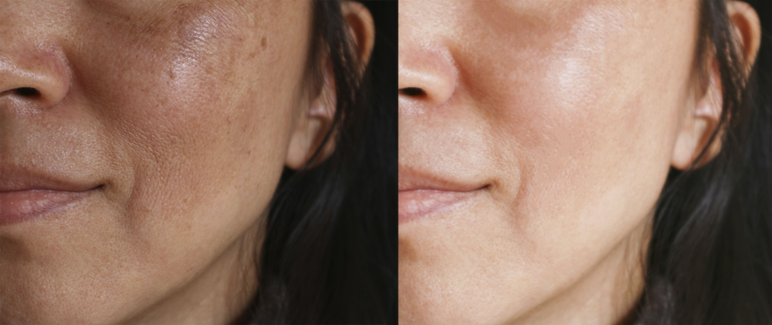
This unique mechanism makes tranexamic acid effective in fading pigmentation while maintaining good gentleness. Its irritation is far lower than high-concentration acids or retinoic acid, making it suitable for a wide range of people, including those with sensitive skin. Whether used topically as a skincare product for mild to moderate pigmentation or taken orally under a doctor's guidance to treat stubborn melasma, tranexamic acid demonstrates clear and reliable whitening and spot-fading effects.
How long does it take for tranexamic acid to reduce hyperpigmentation?
The time required for tranexamic acid to lighten pigmentation varies depending on the method of application, type of pigmentation, and individual differences. Generally, topical TXA at a concentration of 2%-5% requires continuous use for 4 to 8 weeks to see initial improvement, such as fading of acne scars or mild sunspots. For stubborn pigmentation such as melasma, it usually takes 8 to 12 weeks to achieve a significant fading effect. Oral tranexamic acid (used under the guidance of a doctor) for moderate to severe melasma usually shows significant improvement within 4 to 8 weeks, with a more ideal degree of fading achieved around 12 weeks.
It is important to note that tranexamic acid is not an instant bleaching agent; it works by gradually blocking melanin activation signals. Therefore, patient and continuous use for 2 to 3 months is crucial. Some users may experience an improvement in skin tone evenness and overall brightness within 2 to 4 weeks, while a significant reduction in the area and depth of pigmentation requires a longer period. Regardless of the method, strict sun protection can significantly enhance the effect and prevent recurrence.
Why choose tranexamic acid to treat discoloration?
Tranexamic acid powder, when combined with other ingredients, offers a key advantage in improving pigmentation and dullness by achieving synergistic effects across multiple pathways, while reducing the potential irritation caused by single, high-concentration ingredients. Specifically, tranexamic acid primarily blocks the activation signals to melanocytes from the source, such as those from ultraviolet radiation or inflammation. Tranexamic acid acts as a switch to shut down melanin production at its source, while other ingredients clear existing pigment deposits. This combination approach achieves more efficient, safer, and more comprehensive skin management.
tranexamic acid product for discoloration in market
Tranexamic acid powder is most commonly found in skincare products as a serum, typically at a concentration of 2%-5%, serving as a core active ingredient for fading dark spots or targeted application to acne scars and pigmentation. Secondly, it's used in masks, including sheet masks and cream masks, providing intensive brightening and whitening effects through short-term occlusion and penetration enhancement, suitable for emergency treatments or deep conditioning 1-2 times per week. Tranexamic acid is also added to toners or serums at relatively low concentrations (1%-2%), primarily for daily patting or compresses to even out skin tone and prevent new pigmentation.
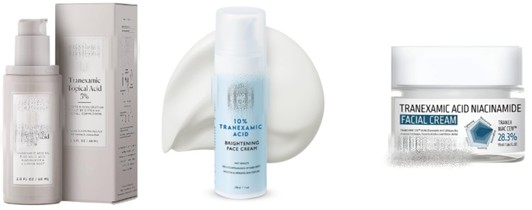
Furthermore, creams and lotions often combine tranexamic acid with moisturizing and repairing ingredients, suitable for dry or sensitive skin as a long-term whitening product for maintaining skin stability. For stubborn melasma, some ampoules or concentrated serums use higher concentrations (above 5%) combined with penetration-enhancing technologies to provide a short-term intensive treatment. In recent years, there have also been attempts to add tranexamic acid to sunscreens, aiming to protect against and repair sun damage simultaneously. In general, consumers can choose the appropriate product from various formulations such as serums, masks, lotions, and creams, based on the severity of their pigmentation problems, skin type, and usage habits.
Where to buy the best tranexamic acid powder?
Choosing our tranexamic acid powder means you not only receive over 99%, pharmaceutical-grade raw materials, but also a complete, customizable service system. As the source factory, we supply directly at factory prices, helping you significantly reduce costs and increase profit margins while ensuring quality. We understand that every B2B client has a different product positioning, target audience, and formulation system. Therefore, from concentration customization and dosage form adaptation (serums, masks, lotions, creams, etc.) to compound formulation design (synergistic pairing with niacinamide, arbutin, anti-inflammatory and soothing ingredients, etc.), our technical team can provide flexible support according to your needs. Contact us at info@kintaibio.com.