

In the R&D of functional foods and dietary supplements, the choice between phosphatidylcholine and choline has long been a pivotal issue for B2B product managers and formulators. While they may appear related, they differ significantly in terms of stability, bioavailability, and physiological function. Many industry professionals mistakenly equate the two; however, this misconception can lead to formula instability, reduced efficacy, and missed opportunities in the precision nutrition market. While choline supplements undergo rapid microbial degradation in the body, phosphatidylcholine, through its more stable, targeted delivery, is quietly redefining industry standards for choline efficacy. Contact us at info@kintaibio.com.
What is phosphatidylcholine?
Phosphatidylcholine (PC), commonly known as lecithin, is a naturally occurring glycerophospholipid found in the cell membranes of all living organisms. Its molecular backbone consists of glycerol, two fatty acid chains, a phosphate group, and a choline head group; this unique amphiphilic head-tail structure, featuring a hydrophilic head and a lipophilic tail, makes it a core component of the cell membrane bilayer. It also serves as the primary source of choline in mammalian cells and plays a pivotal role in hepatic VLDL secretion and the metabolism of lipids and lipoproteins. Commercially, owing to its excellent biocompatibility and emulsifying properties, PC is widely utilized as an emulsifier and solubilizer, as well as an ideal precursor material for liposomal delivery systems, holding significant value across the functional food, dietary supplement, and pharmaceutical sectors.
What is choline?
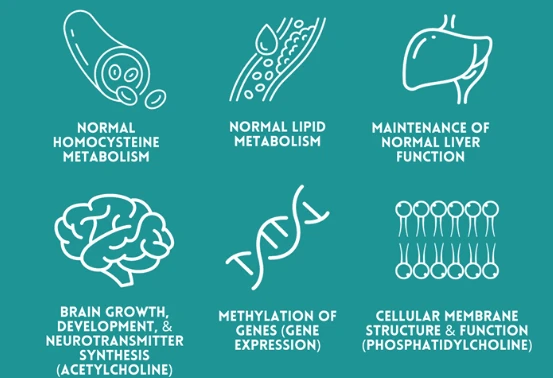
Choline is a water-soluble quaternary ammonium compound with the chemical formula C₅H₁₄NO⁺; it was officially recognized as an essential human nutrient in 1940. Although it is classified as a vitamin-like substance rather than a vitamin or mineral, it is an indispensable micronutrient for maintaining normal bodily functions. Physiologically, choline plays multiple critical roles: it serves as a precursor for the synthesis of acetylcholine-a vital neurotransmitter involved in signal transmission within the nervous system, as well as in memory, muscle control, and mood regulation. Additionally, choline is a key component of cell membrane phospholipids (such as phosphatidylcholine) and betaine, playing a significant role in hepatic lipid metabolism, methylation reactions, and the reduction of homocysteine levels.
In terms of dietary sources and supplements, common forms of choline include choline chloride, choline bitartrate, and choline citrate. While the human liver can synthesize small amounts of choline endogenously, this production falls far short of daily requirements; therefore, exogenous intake through diet (e.g., eggs, animal liver, fish, and legumes) or supplements is essential. For B2B clients, selecting the appropriate form of choline requires a comprehensive evaluation of stability, bioavailability, and compatibility with end-product formulations to ensure maximum efficacy.
Is phosphatidylcholine and choline the same?
In terms of chemical structure, choline is a simple, water-soluble quaternary ammonium salt molecule (C₅H₁₄NO⁺), whereas phosphatidylcholine is a structurally complex glycerophospholipid; its molecular backbone comprises glycerol, two fatty acid chains, a phosphate group, and a choline head group. Choline is merely one component of the larger phosphatidylcholine molecule-a relationship akin to that between a single part and the complete machine.
Their physiological roles also differ markedly. Free choline functions primarily as a precursor to the neurotransmitter acetylcholine and as a source for the methyl donor betaine, participating in nervous system signaling and hepatic lipid metabolism. In contrast, bulk phosphatidylcholine serves as a core structural component of the cell membrane bilayer, maintaining cellular integrity and fluidity, and acts as a key raw material for liposome delivery systems.

Which is better, phosphatidylcholine or choline?
Free-form choline, characterized by its low molecular weight and high choline density, yielding 70% to 85% choline content by weight-can rapidly cross the blood-brain barrier to serve directly as a precursor for the neurotransmitter acetylcholine. It acts more immediately in scenarios requiring short-term cognitive enhancement, improved athletic performance, or rapid methyl donor replenishment; furthermore, its mature production process and cost-effectiveness make it particularly suitable for price-sensitive entry-level supplements or feed additives.
In contrast, phosphatidylcholine serves as a native building block for cell membrane bilayers; it is absorbed as an intact molecule and preferentially incorporated into the membranes of hepatocytes and neurons, playing an irreplaceable, targeted role in ameliorating non-alcoholic fatty liver disease and repairing aging or damaged neuronal membranes. Its gentle metabolic pathway significantly mitigates the issues associated with free choline namely, the fishy odor caused by gut microbial degradation into trimethylamine (TMA) and the potential risks linked to TMAO (trimethylamine N-oxide)making it better suited for long-term use. Consequently, for B2B product selection, free choline is the preferred choice when budget and rapid results are the priorities, whereas phosphatidylcholine is undoubtedly the superior option when the focus is on liver protection, cellular repair, and premium formulation quality.
phosphatidylcholine vs choline supplemts in market
Free choline supplements feature relatively standardized product formats and mature manufacturing processes. Choline chloride and choline bitartrate are the most common forms; typically available as powders or standard tablets, they serve as choline sources in B-complex vitamin blends and cognitive support formulas. Due to their low cost and high choline density, they are also widely used in liquid oral solutions and ready-to-mix powders for rapid replenishment of the body's choline levels. In recent years, choline citrate has emerged as a gentler alternative, gaining traction in children's chewable tablets and vegan-friendly products. Additionally, Alpha-GPC (L-alpha-glycerylphosphorylcholine) and Citicoline (CDP-choline)-derivatives of free choline-have evolved into a distinct category of premium cognitive enhancers; prized for their ability to efficiently cross the blood-brain barrier, they are particularly sought after in the nootropics market.

Phosphatidylcholine supplements are predominantly available as softgels, a format dictated by their lipid-soluble and emulsifying properties. The most traditional and widely available products are soy lecithin and sunflower lecithin capsules, typically positioned for daily cellular nutrition and cardiovascular health support. In the functional food sector, high-purity phosphatidylcholine (with PC content ranging from 70% to 90%) has been developed into specialized liver-support products targeting individuals with non-alcoholic fatty liver disease.
Where to buy the best phosphatidylcholine powder?
Choosing our Healthkintai® phosphatidylcholine (PC) raw materials means gaining more than just an intermediate; you secure a comprehensive supply chain solution encompassing regulatory compliance, a diverse product portfolio, and tailored services. Regarding certification, our production facilities strictly adhere to GMP standards and hold international accreditations such as ISO, Kosher, and Halal, while providing complete batch COAs and full-chain traceability documentation. In terms of specifications, we offer a full product range with PC purity levels spanning from 20% to over 98%, available in various physical forms suited to different dosage types. On the customization front, our flexible production lines allow us to adjust fatty acid composition, peroxide value limits, residual solvent levels, and particle size distribution to meet specific client requirements, as well as provide proprietary formulations combining PC with active ingredients such as free choline and citicoline.Contact us at info@kintaibio.com.
