Zeaxanthin vs Astaxanthin
2026-01-28 14:02:37
Zeaxanthin and astaxanthin,their similar names often confuse B2B clients when choosing between them: which is better? The answer isn't a simple either-or choice, but rather understanding their respective strategic positioning and synergistic effects. Today, we'll delve into this golden duo, revealing how they build a protective barrier for human health from different dimensions and exploring their market opportunities. Kintai is a manufacturer and supplier of astaxanthin and zeaxanthin. If you require wholesale raw material powders, please feel free to contact us at info@kintaibio.com.
What is Zeaxanthin and Astaxanthin?
Zeaxanthin is a naturally occurring carotenoid belonging to the lutein family. It is a core component of macular pigment in the human retina, working alongside lutein to absorb harmful high-energy blue light and exerting a powerful antioxidant effect, neutralizing free radicals and protecting visual cells from photo-oxidative damage. Zeaxanthin is mainly found in natural plants such as marigolds, corn, goji berries, and orange bell peppers. It cannot be synthesized by the human body and must be obtained through diet or supplements. It plays a crucial role in maintaining visual health and delaying age-related macular degeneration, making it a key functional component for eye nutrition.
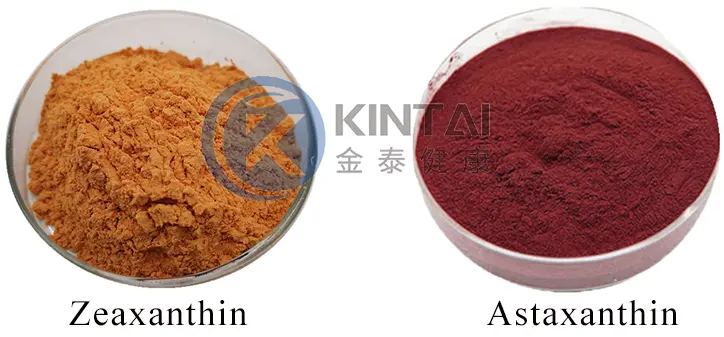
Astaxanthin is a naturally occurring ketocarotenoid, hailed as the king of antioxidants. Primarily derived from Haematococcus pluvialis, krill, and certain marine organisms, it possesses extremely strong antioxidant capabilities, far surpassing the potency of common antioxidants such as vitamin C and vitamin E. Astaxanthin effectively scavenge free radicals, inhibits lipid peroxidation, and exhibits significant anti-inflammatory properties. It can cross the blood-brain barrier and cell membranes, providing protection for multiple tissues throughout the body, including the brain, eyes, skin, and joints. It is widely used in improving athletic endurance, promoting skin health, supporting cognitive function, and relieving eye strain, making it a high-value natural functional ingredient.Healthkintai®‘s zeaxanthin powder is extracted from high-quality marigold petals, and astaxanthin is extracted from Haematococcus pluvialis, providing you with various specifications of plant extract powders.
Can you take Astaxanthin and Zeaxanthin together?
When developing formulations for B2B clients, there's no need to choose between zeaxanthin and astaxanthin. In fact, their scientific combination can construct a comprehensive health network, from precise local defense to systemic protection.
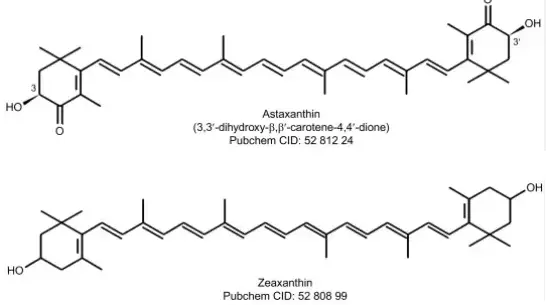
Zeaxanthin, as a dedicated guardian of eye health, is highly concentrated in the macula of the retina, focusing on filtering harmful blue light and neutralizing oxidative damage to the eyes, achieving targeted defense. Astaxanthin, as the king of antioxidants, leverages its superior transmembrane capabilities to conduct mobile defense throughout the body, reducing overall oxidative stress and inflammatory load through powerful antioxidant and anti-inflammatory effects. This combination of internal and external protection not only creates a better microenvironment for the delicate organ that is the eye but also provides systemic support for overall health through local defense.
Using zeaxanthin and astaxanthin, specifically designed for eye health, as the core product concept clearly educates consumers while simultaneously meeting their dual needs,improving overall health, thereby significantly enhancing the product's technological added value and market competitiveness.
The Zeaxanthin and Astaxanthin Supplement Market
Currently, the health food and supplement market is actively embracing the innovative trend of integrating zeaxanthin and astaxanthin, giving rise to segmented product lines with clear positioning and high premium capabilities.In the eye nutrition sector, traditional lutein formulas are being upgraded by adding astaxanthin, claiming to provide a comprehensive anti-photoaging solution from the fundus to the whole body. In compound antioxidant products, these two ingredients serve as the core engine of a super antioxidant matrix, synergizing with vitamins C and E to build a stronger defense network.
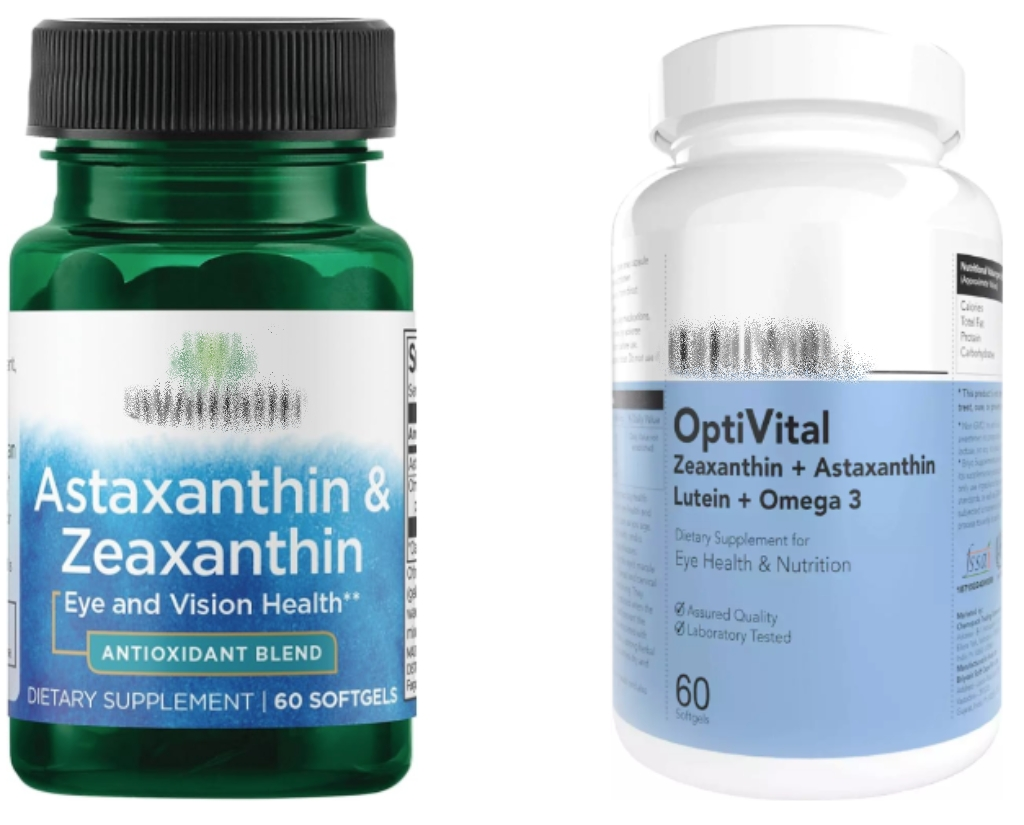
Furthermore, in the sports nutrition and beauty liquid market, formulas cleverly combine the core functions of astaxanthin in sports recovery and skin photoprotection, adding zeaxanthin to enhance the added beauty value of bright eyes, thereby expanding consumption scenarios. These innovative products not only precisely meet consumers' dual needs for targeted eye care and overall anti-aging, but also significantly enhance technological added value through the concept of scientific compounding, leading the functional food market towards a new trend with greater synergistic effects and overall health value.
Are Zeaxanthin and Astaxanthin safe?
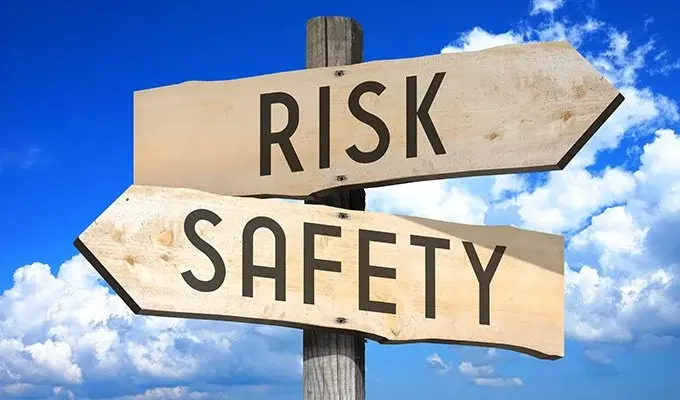
Astaxanthin and zeaxanthin both have a high safety record at regulatory-approved dosages and are widely recognized as safe dietary components. Both are natural antioxidants, well-tolerated at regular supplementation doses, with serious adverse reactions being extremely rare. Most possible reactions are mild and reversible; for example, very high doses of astaxanthin may cause a temporary orange-red discoloration of the skin or stool; high intake of zeaxanthin may also cause mild yellowing of the skin (carotenoidemia). These phenomena will subside spontaneously after reducing or ceasing intake. Long-term studies have shown that appropriate supplementation is safe for healthy individuals.
Where to buy the best Zeaxanthin and Astaxanthin?
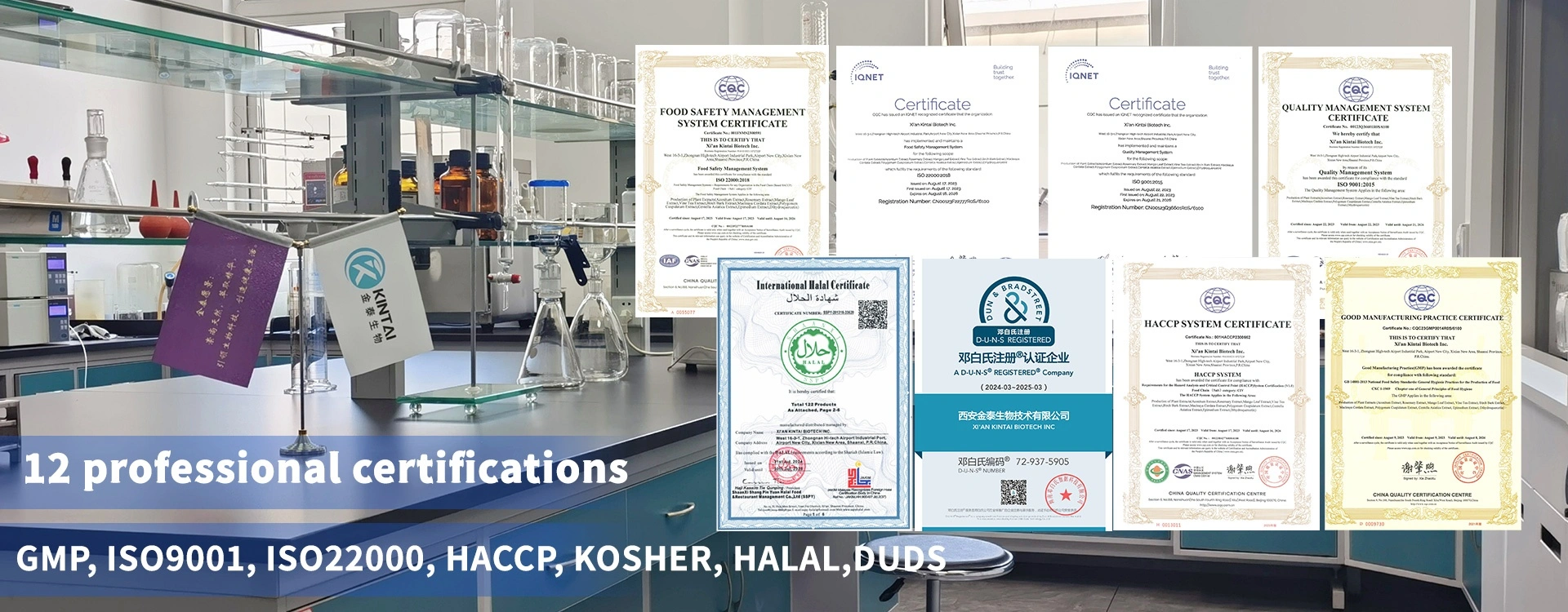
Choosing our zeaxanthin and astaxanthin is a reliable guarantee for your market advantage. We provide top-quality raw materials from our own marigold plantations and Haematococcus pluvialis cultivated in closed photobioreactors, ensuring full traceability and purity from source to finished product, guaranteeing high activity and excellent stability of the active ingredients.
With large-scale production and a vertically integrated supply chain, we can provide you with a highly competitive cost advantage while exceeding international standards. Furthermore, we support comprehensive and flexible customization, including concentration, carrier, and formulation ratios. If you wish to wholesale marigold extract zeaxanthin and Haematococcus pluvialis extract astaxanthin, please contact us at info@kintaibio.com.
FAQ
Is astaxanthin hard on the liver?
No,astaxanthin from natural sources is generally not hard on the liver. In fact, numerous studies highlight its protective effects due to its potent antioxidant and anti-inflammatory properties. Research suggests it may help reduce liver enzyme levels and protect liver cells from damage caused by toxins or oxidative stress.
Is astaxanthin safe for seniors?
Yes, high-quality astaxanthin from natural sources is generally considered safe and potentially beneficial for seniors when taken at recommended doses. Its strong antioxidant and anti-inflammatory properties are particularly valuable for supporting age-related concerns such as joint comfort, cognitive health, skin protection, and eye health. Clinical studies have not indicated specific liver or kidney toxicity at standard dosages.