Can Vitamin C be used with Copper Peptides?
2025-12-05 14:12:16
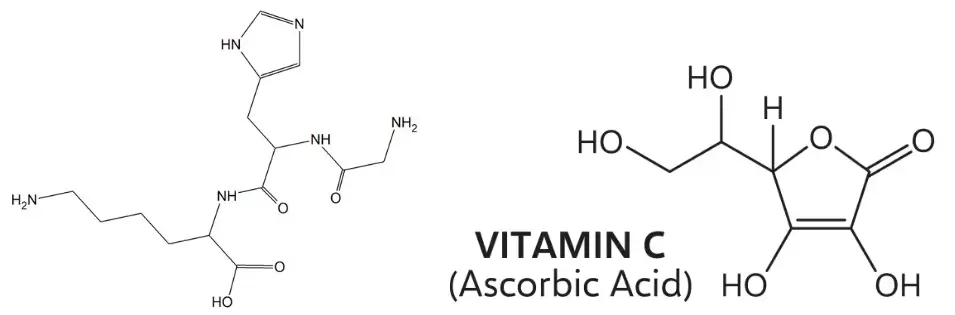
Vitamin C and Copper Peptides are star ingredients in the skincare industry. There are ongoing questions about whether they can coexist. Today, we definitively answer: Yes, they can. However, it's not simply a matter of adding ingredients together; a complete scientific solution is needed to resolve the conflict and unleash their potential.
Healthkintai® is a leading copper peptide supplier in China. We provide 99% pure Copper Peptide Powder (raw material and freeze-dried powder). Please feel free to contact us at info@kintaibio.com.
Why mix Vitamin C and Copper Peptides?
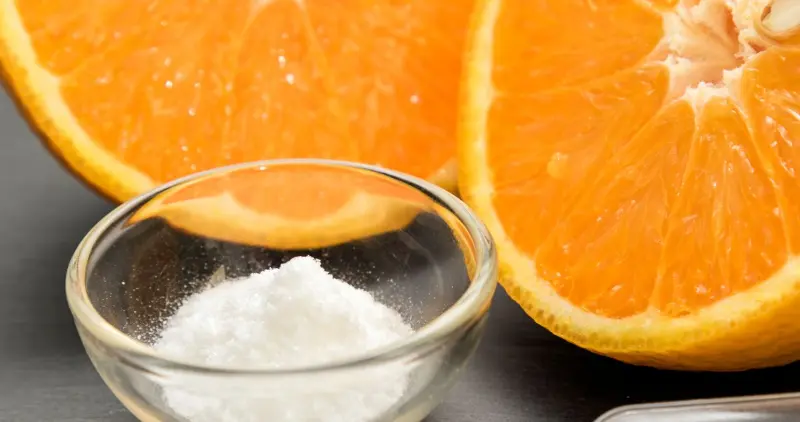
Vitamin C, a classic antioxidant in skincare, serves as the first line of defense against external aggressors. It effectively neutralizes free radicals, directly combating photoaging and oxidative stress, resulting in remarkable brightening and evening skin tone. More importantly, Vitamin C is an essential cofactor for collagen synthesis, directly participating in and stabilizing the triple helix structure of collagen, fundamentally supporting skin elasticity and firmness. However, its instability and potential irritation pose key challenges in formulation.
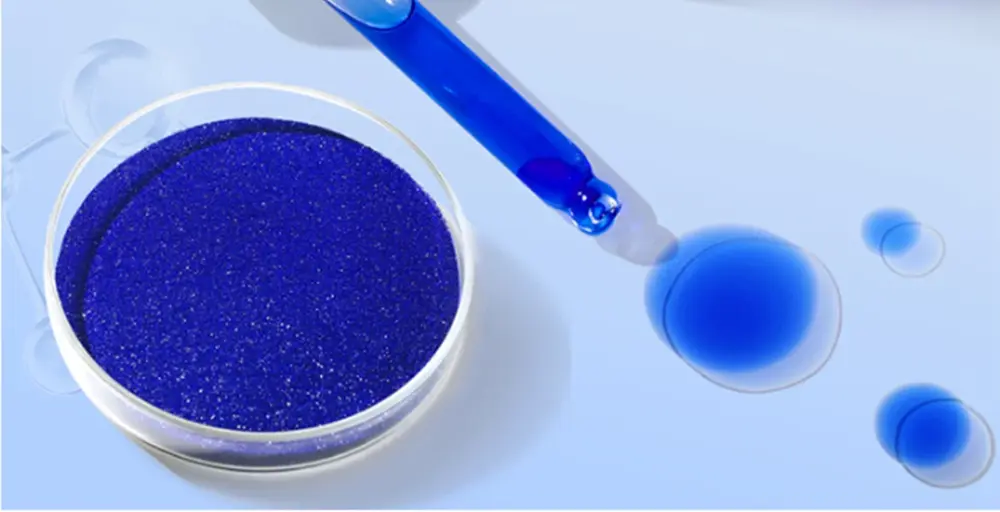
GHK-Cu (Golden Copper Peptide) is a bioactive signaling peptide, acting like a precise repair commander. It systemically promotes skin self-renewal by sending intelligent repair signals to skin cells, activating the gene expression of key structural components such as collagen, elastin, and glycosaminoglycans. Simultaneously, its excellent anti-inflammatory and repairing properties effectively strengthen the skin barrier, improving overall skin health and resilience. Its gentle and precise mechanism of action provides a new pathway for effective anti-aging.
When combined scientifically, these two ingredients create a synergistic effect greater than the sum of their parts: Vitamin C builds an antioxidant defense against environmental damage, while copper peptides initiate a repair process internally, accelerating recovery. Even more remarkably, the soothing properties of copper peptides help balance any potential irritation from Vitamin C, broadening the product's suitability for various skin types. The two complement each other for even better results.
How do you mix vitamin C and copper peptides?
Utilizing a dual-compartment/single-use design, the two active ingredients are physically isolated and stored, allowing for immediate mixing upon use, perfectly avoiding incompatibility reactions. Microencapsulation technology acts like an "independent safe" for each ingredient, maintaining separation during storage and ensuring precise release onto the skin.Choosing more stable VC derivatives (such as AA2G and ethyl VC), while slightly compromising conversion efficiency, significantly improves compatibility. Simultaneously, using specially stabilized blue copper peptide raw materials protects their tripeptide structure, maintaining activity in complex systems.
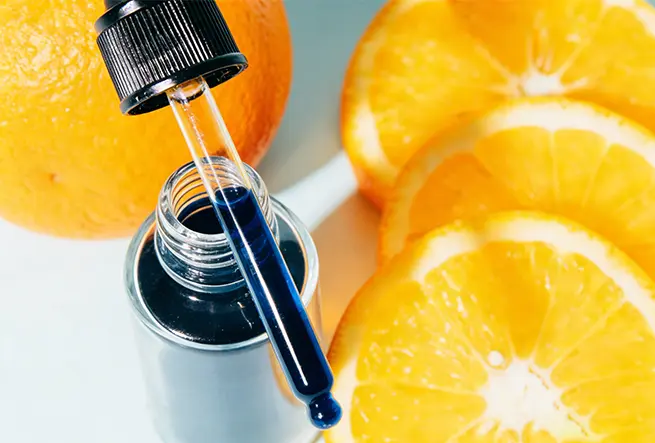
Finely controlling the formulation within a narrow pH stability window (e.g., 5.0-6.0); constructing a "complex protective network" composed of chelating agents and antioxidants to inhibit ion interference and oxidation reactions; or innovatively using non-traditional matrices such as anhydrous or oil phases to fundamentally avoid the instability factors in the aqueous phase.
Copper Peptides and Vitamin C Dosage
|
Product Positioning |
Recommended VC Concentration |
Recommended GHK-Cu Concentration |
Technical Focus |
|
Gentle Repair Formula |
3% - 5% (or derivative equivalent) |
0.1% - 0.2% |
Prioritize stability, suitable for sensitive skin or daily anti-aging |
|
High-Efficacy Anti-Aging |
8% - 12% (pure VC/derivative) |
0.2% - 0.4% |
Requires physical separation or micro-encapsulation to enhance synergy |
|
Advanced Restoration |
5% - 8% (pure VC) |
0.3% - 0.5% |
Requires strict pH control (≈5.5-6.0) and protective systems |
Safety of Mixing Copper Peptides and Vitamin C
Directly mixing Vitamin C with Copper Peptides carries clear risks, which are amplified dramatically when the copper peptide raw material is of substandard quality. Inferior raw materials, with insufficient purity and excessive impurities, can cause uncontrollable redox reactions with Vitamin C, accelerating discoloration, separation, and deactivation of the formula. More seriously, substandard raw materials may contain harmful microorganisms or heavy metal residues, generating unpredictable byproducts in the complex reaction with Vitamin C, leading to skin irritation, allergies, and even safety concerns.
This not only means complete product failure but can also cause devastating damage to a brand's reputation. Therefore, choosing high-purity copper peptide raw materials with complete stabilization technology and safety documentation is the first and most important line of defense against compatibility risks.
Where to buy the Best Copper Peptide?
KINTAI Adventages:
- Superior Quality
Our blue Copper Peptide raw materials boast a purity of up to 99%, ensuring the bioactivity and stability of the core ingredient, GHK-Cu. This near-perfect purity is the fundamental guarantee for your end products to achieve significant repair and anti-aging effects, directly enhancing your product's market reputation and user trust.
- International Certifications
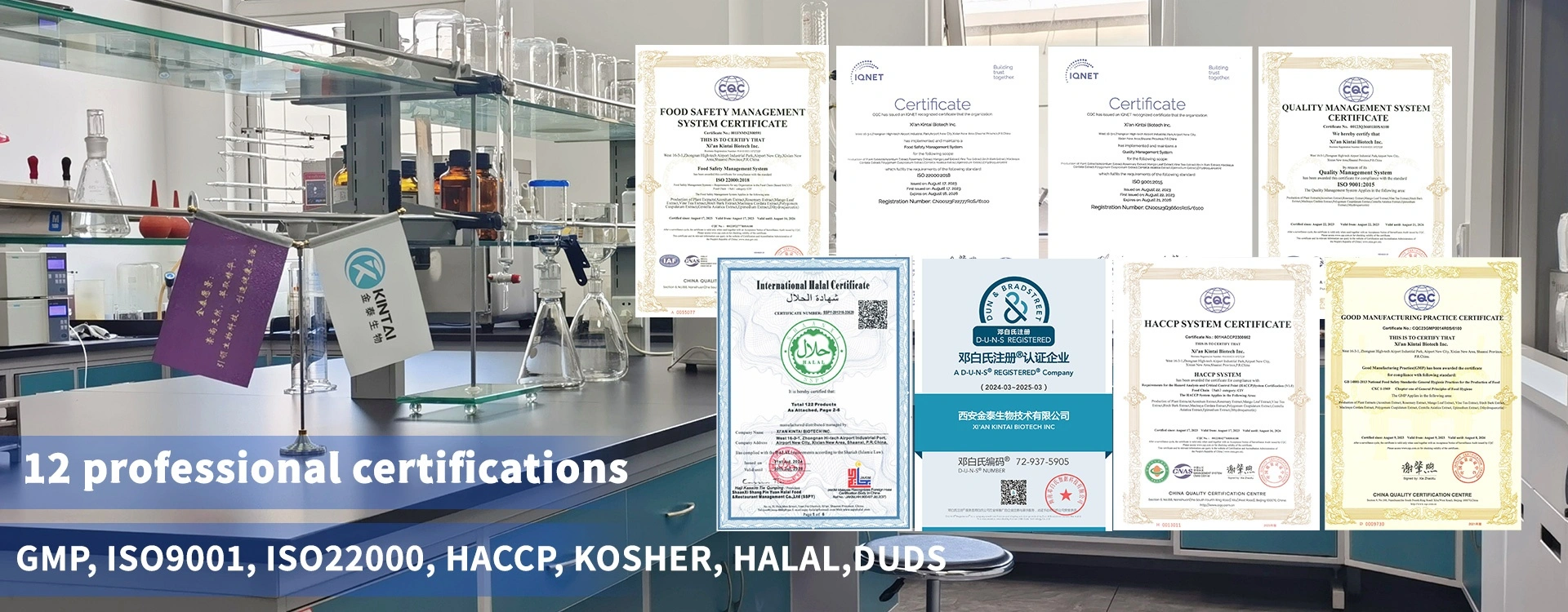
Our production system has fully passed authoritative international quality system certifications such as GMP, ISO, and HACCP, and has also obtained KOSHER and HALAL certifications. This not only represents world-class quality management standards but also removes compliance obstacles for your products to be sold in different regions and markets worldwide, meeting diverse consumer needs.
- Flexible Customization
We deeply understand the differences in formulation and market positioning among different clients, therefore providing professional customized services. Whether you have special requirements for raw material specifications, concentrations, or compound solutions, our technical team can work closely with you to tailor the most competitive raw material solutions, helping your products stand out in the market.
Healthkintai® is one of the most experienced manufacturers and suppliers of Copper Peptide Powder in China. Please feel free to wholesale high quality copper peptide powder from our factory. For quotation, contact us at info@kintaibio.com.
FAQ
Q1:Which is better, Copper Peptides or vitamin C?
A1:Vitamin C is a classic daytime defense and whitening ingredient. Copper peptides focus more on the overall rebuilding and restoration of skin health. The best strategy is to use them together, following the "morning C, evening peptide" principle: use Vitamin C for protection during the day and copper peptides for repair at night, achieving complementary effects. Sensitive skin types may prefer the gentler copper peptides.
Q2:What Cannot mix with Copper Peptides?
A2:High-concentration pure vitamin C (L-ascorbic acid): These two ingredients may undergo redox reactions, canceling each other out. It is recommended to use them separately in the morning and evening. Strong acids (such as glycolic acid and salicylic acid): The extremely low pH environment can disrupt the stable structure of copper peptides, leading to their inactivation. Chelating agents (such as EDTA): These may compete for copper ions, causing the peptide structure to break down.