
While both impart vanilla flavor, the difference between natural vanilla extract and synthetic vanillin is akin to the gap between a symphony and a single musical note. Vanilla extract is derived from natural vanilla beans, offering complex layers of woody and caramel-like notes; in contrast, over 99% of commercially available vanillin is a chemically synthesized, single pure compound that captures the essence of vanilla flavor at a fraction of the cost. In terms of price, natural extract can cost dozens of times more than synthetic vanillin. This article will help you decide which one to choose.Contact us at info@kintaibio.com.
What is vanillin?
Vanillin is the core and most iconic aroma compound associated with vanilla flavor; chemically known as 4-hydroxy-3-methoxybenzaldehyde, it belongs to the class of phenolic aldehyde aromatic compounds. As one of the most widely used food flavorings globally, it holds a dominant position in the vanilla flavor market thanks to its sweet, warm, and rich vanilla profile.
While vanillin occurs naturally in plants such as vanilla beans, cloves, and guaiacum, natural supplies are extremely limited-a single vanilla bean contains only about 1–2% vanillin, making extraction costs prohibitively high. Consequently, over 99% of commercially available vanillin is synthetically produced. Major synthetic routes utilize lignin, eugenol, or guaiacol, resulting in costs that are merely a fraction of those associated with natural extraction. Our vanillin is produced through the fermentation of rice bran extract-a natural ingredient-thereby striking a balance between the advantages of a natural origin and cost-effectiveness.
What does vanillin do?

The primary function of vanillin is to impart a signature vanilla aroma and flavor to products; it serves as an indispensable ingredient in the global food and personal care industries due to its ability to enhance fragrance, act as a fixative, and mask unpleasant odors. In food and beverages, vanillin is widely used in ice cream, chocolate, baked goods, dairy products, and drinks, providing a sweet, warm vanilla base note while refining and rounding out the overall flavor profile-such as by reducing bitterness in chocolate, enhancing milky notes in dairy, and balancing cloying sweetness in baked goods-all while offering significant cost advantages due to the very low dosage required. In personal care products, it acts as an excellent fixative, stabilizing volatile fragrances and extending their longevity, while lending a soft, sweet background scent to skincare products, perfumes, and soaps.
In the pharmaceutical and tobacco sectors, it serves to mask bitterness from active drug ingredients or mellow the smoke of tobacco products.Vanillin also possesses some auxiliary antioxidant and antimicrobial properties, though these are considered added benefits. Ultimately, vanillin provides a cost-effective way to infuse countless products with vanilla characteristics, establishing a warm aromatic foundation; while it is a vital supporting player in the food and personal care industries, it represents the structural framework of the vanilla flavor rather than its complete soul.
What is vanilla extract?
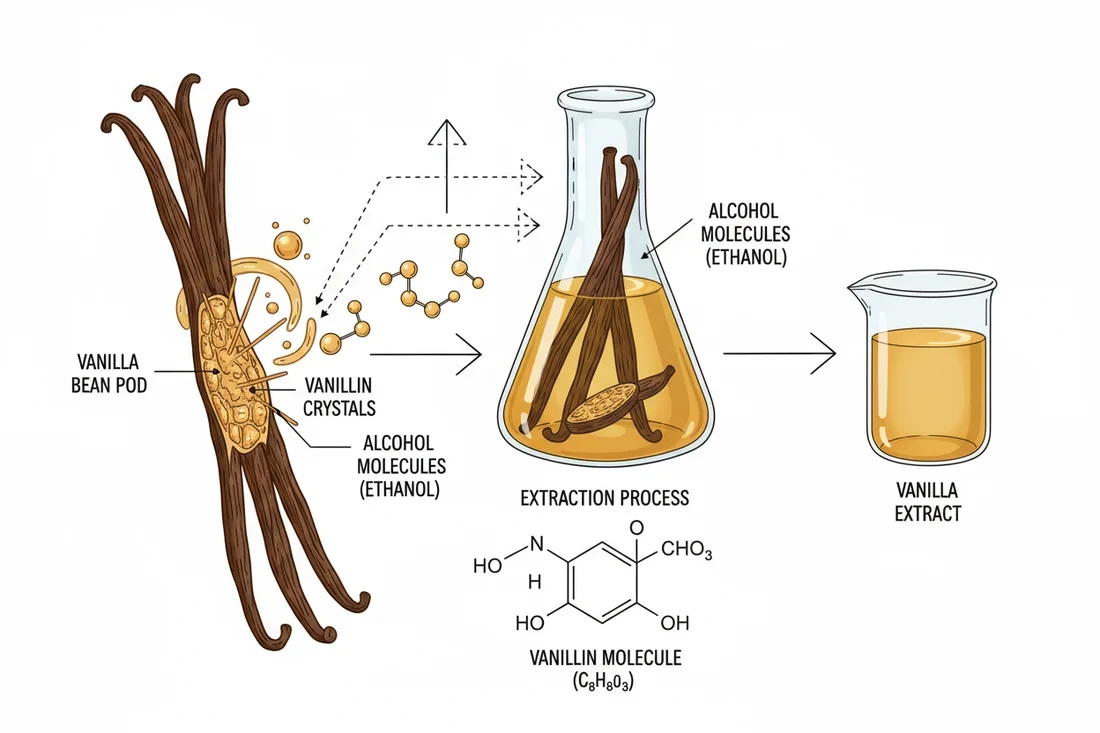
Natural vanilla extract is an amber-colored liquid obtained through an alcohol extraction process using natural vanilla beans as the raw material. It contains over 200 flavor compounds derived from the beans, forming a complex flavor profile composed of various aromatic molecules such as vanillin, p-hydroxybenzaldehyde, vanillic acid, guaiacol, and furfural. The production process involves chopping the vanilla beans and soaking them in a solvent mixture of alcohol and water; after a low-temperature extraction period ranging from several weeks to months-allowing the flavor compounds to fully dissolve-the mixture undergoes filtration and maturation to yield the final product.
According to US FDA standards, only liquids with an alcohol content of at least 35% by volume and containing a minimum of 13.35 ounces of vanilla bean solids per gallon may be labeled as pure natural vanilla extract; the EU and other regions enforce similarly strict regulations to distinguish extracts from flavorings. In terms of price, natural vanilla extract can cost tens or even hundreds of times more than synthetic vanillin; this high cost stems from the long three-to-four-year cultivation cycle of vanilla beans, the extremely time-consuming nature of hand-pollination, and the fact that yields are heavily influenced by climate conditions. Essentially, vanilla extract serves as a flavor hologram of the vanilla bean, capturing the comprehensive profile of vanillin and hundreds of other compounds, rather than consisting merely of a single vanillin molecule.
How does vanilla extract work?
The mechanism behind vanilla extract is essentially a sophisticated process of flavor delivery rather than a chemical leavening or denaturing reaction. It relies on a water-alcohol solvent blend to efficiently extract hundreds of aromatic compounds-primarily vanillin-from vanilla beans, creating a complex and well-rounded aromatic profile. During baking or cooking, the alcohol's excellent dispersing properties allow these flavor molecules to integrate evenly into mediums such as batters or custards. As heating progresses, the low-boiling-point alcohol evaporates first, while high-boiling-point compounds like vanillin remain, gradually releasing their signature sweet, warm aroma into the food.
Where to buy the best vanillin?
Healthkintai® vanillin product is derived from ferulic acid extracted from rice bran and produced via microbial fermentation; classified as biovanillin, it perfectly aligns with the strict definitions and market demands for natural sourcing within the global food and flavor industries and fully meets requirements for natural equivalence-a core competitive advantage that chemically synthesized vanillin cannot match. Compared to traditional vanillin synthesized from petrochemical feedstocks, our product is not only non-toxic and eco-friendly but also meets the global market's growing demand for natural food additives, offering a superior alternative that combines natural origins, mature technology, and cost-competitiveness.

FAQ
Q: 1. What is vanillin and what is it used for?
A: Vanillin is the primary chemical compound responsible for the characteristic flavor and aroma of vanilla. It is the most widely used flavoring agent in the world, found in a vast range of products including baked goods, chocolates, ice cream, beverages, confectionery, pharmaceuticals, and even perfumes. While natural vanillin is extracted from vanilla orchid pods, the majority of vanillin used commercially is produced synthetically or via biotechnological processes to meet global demand at a lower cost.
Q: 2. What is the difference between natural vanillin and synthetic vanillin?
A: Natural vanillin is derived directly from vanilla beans through extraction, offering a complex, rich flavor profile with hundreds of trace aromatic compounds. Synthetic vanillin, on the other hand, is manufactured from petrochemical precursors like guaiacol or lignin, providing a pure, single-note vanilla flavor at a fraction of the cost. There is also a third category-bio-vanillin-produced by microbial fermentation of natural substrates such as ferulic acid from rice bran, which is considered "natural" under regulations and offers a middle ground between authenticity and affordability.
Q: 3. Is vanillin safe to consume?
A: Yes, vanillin is recognized as safe (GRAS) by major regulatory authorities including the FDA and EFSA when used within approved limits. It has a long history of safe use in food and beverage applications worldwide. However, as with any food additive, individuals with specific sensitivities should always check product labels. The safety profile of synthetic, natural, and bio-based vanillin is considered equivalent, as all forms ultimately deliver the same chemical compound to the consumer.
Q: 4. Where can I buy high-quality vanillin in bulk?
A: High-quality vanillin in bulk quantities is available through specialized chemical and food ingredient suppliers worldwide. China is the world's largest producer of vanillin, accounting for approximately 70% of global supply, making B2B platforms such as Alibaba and Made-in-China excellent places to source from certified manufacturers. For buyers seeking bio-vanillin produced via fermentation from natural ferulic acid, it is advisable to work directly with manufacturers that can provide ISO, HACCP, and FDA certifications, along with third-party Certificates of Analysis (COA) to verify purity and quality. Sample testing is always recommended before placing large orders.