

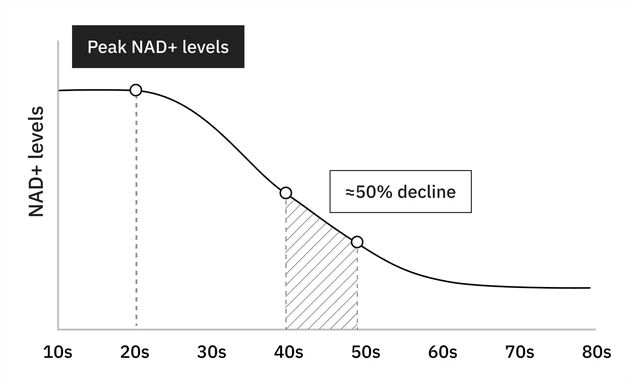
As a key coenzyme for human cellular energy metabolism and DNA repair, NAD⁺ levels decline year by year with aging. Supplementing with NAD⁺ precursors has therefore become the most direct and popular anti-aging approach nowadays. Among various NAD⁺ precursor supplements, NMN has long stood out thanks to mature technology and well-documented efficacy. In recent years, NMNH, claimed to possess ten times the activity of NMN, has quickly become a new favorite among anti-aging enthusiasts for its faster onset of action and stronger repair capacity. Nevertheless, numerous questions have arisen: as both are NAD⁺ precursors, what are the essential differences between NMN and NMNH? Which is better?
Supported by the technical strength of the professional R&D team at Healthkintai®, we supply full-specification NMN powder and NMNH powder, with purity stably reaching over 99%. In addition, NMN is available in 40-mesh and 70-mesh sieve granule specifications, featuring a complete product range and reliable quality. Should you be interested, please contact us at health@kintaibio.com for a quotation.
What Is NMNH vs NMN?
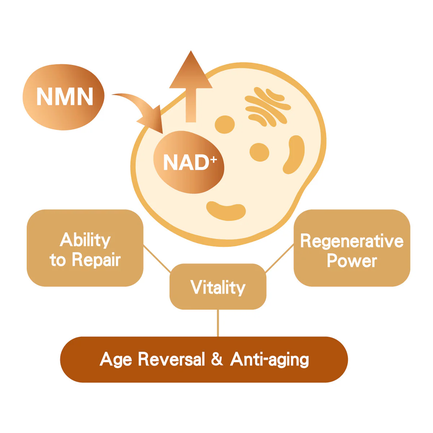
NMN, full name β-Nicotinamide Mononucleotide, is a naturally occurring vitamin B derivative in the human body and the most core and mainstream direct precursor of NAD+ (Coenzyme I). The level of NAD+ declines year by year during human aging, which in turn affects cellular metabolism, energy production, the activity of Sirtuins longevity proteins, and DNA repair capacity. Supplementing NMN can elevate the body's NAD+ reserve gradually through intracellular enzymatic reactions, making it the most widely used classic raw material in the fields of anti-aging and cellular maintenance.
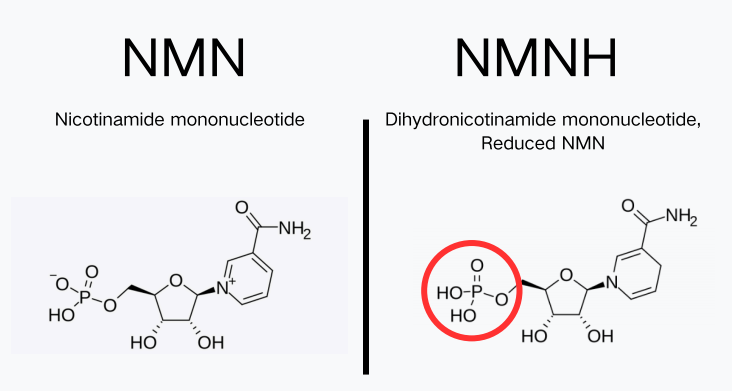
NMNH, full name Reduced β-Nicotinamide Mononucleotide, is the reduced active form of NMN and belongs to a new-generation upgraded NAD+ precursor. Unlike conventional oxidized NMN, NMNH carries active reducing hydrogen and stays in a high-energy active state. It does not rely on the catalytic limitation of the intracellular rate-limiting enzyme NAMPT, and can directly participate in the in vivo redox metabolic cycle. It simultaneously replenishes dual coenzymes of NAD+ and NADH, with far higher absorption utilization and conversion efficiency than conventional NMN, positioning it as a high-activity advanced anti-aging raw material.

Whether it is NMN or NMNH, they share the same core goal: to elevate intracellular NAD⁺levels, exert anti-aging, metabolism-improving and cell-repairing effects, and ultimately help people delay aging and improve overall health quality. In addition, they have similar essential properties: both are NAD⁺precursor supplements and can be administered orally.
NMN VS NMNH: Safety and Side Effects
Safety is the primary prerequisite for choosing dietary supplements, and NMN boasts outstanding advantages in this regard. It has undergone years of clinical verification, with relevant product standards and regulations established in many countries and regions worldwide, alongside mature market supervision. Its safety for long-term use is widely recognized with almost no obvious side effects. Only a small number of people may experience mild gastrointestinal discomfort such as bloating and diarrhea, which usually subsides after 1–2 weeks of adaptation.
As an emerging ingredient, NMNH is still accumulating safety data. It has not yet passed the FDA New Dietary Ingredient review, and there are no unified product standards or regulatory specifications available. In addition, due to the high technical threshold for its production, some unscrupulous merchants label ordinary NMN as NMNH for counterfeiting purposes, or fail to guarantee product activity and purity during production, resulting in potential safety risks. This is an important concern that buyers need to be highly vigilant about when choosing NMNH products.
NMN VS NMNH: Difference
NMN vs NMNH: Molecular Structure, Stability and Storage Conditions
Differences in molecular structure are the root cause of all distinctions between NMN and NMNH.
As an oxidized nucleotide, NMN features a relatively stable molecular structure and requires no special storage conditions. It can be preserved at room temperature away from light, moisture-proof and sealed, with a shelf life of more than 2 years. It is highly convenient for production, transportation and daily storage, which is one of the key reasons why it has become a mainstream product.
As a reduced-state nucleotide, NMNH contains two extra active hydrogen atoms, granting it stronger reducibility while making its molecular structure extremely unstable. It demands extremely strict storage requirements and must be sealed with inert gas and kept at a low temperature of 0-8°C. Otherwise, it is easily oxidized and loses its activity. Moreover, its shelf life is relatively short, generally only 6–12 months. Without proper cold chain protection during transportation, its activity will be severely compromised.
Contact Us for Free Samples Now.>>>
NMN vs NMNH: Absorption and Conversion Efficiency
Absorption and conversion efficiency directly determine the efficacy of dietary supplements. After all, the more ingredients that can actually enter cells and convert into NAD⁺, the better the anti-aging effect will be.
NMN has a relatively complicated absorption and conversion process. It needs to pass through transporters in the intestines to penetrate the cell membrane and enter cells. After entering the cell, it further requires catalysis by the NMNAT enzyme to be finally converted into NAD⁺. During this process, part of NMN will be degraded in the digestive tract and cannot enter cells, resulting in limited bioavailability.
In contrast, NMNH perfectly solves this problem. With a special molecular structure, it can directly penetrate cell membranes and enter cells without relying on transporters. Moreover, after entering cells, it requires no additional enzymatic steps and can rapidly convert into NAD⁺ by utilizing the intracellular reducing environment. Thanks to these two advantages, its bioavailability is much higher than that of NMN, enabling it to raise the speed and concentration of NAD⁺ in the body more effectively.

NMN vs NMNH: Benefits
First, both NMN and NMNH can elevate NAD⁺ levels, activate sirtuin longevity proteins, initiate cellular autophagy, and enhance mitochondrial function. This delivers benefits such as anti‑aging effects, improved energy, better sleep quality, and repair of cellular damage. Obvious anti‑aging improvements can be observed with long‑term supplementation of either ingredient. However, the two differ significantly in functional focus and onset speed.
NMN features stability and mild action. With mature production technology and its safety verified by clinical trials in multiple countries, it causes almost no obvious side effects after long‑term use, making it ideal for long‑term basic anti‑aging maintenance. For those without obvious aging symptoms who merely want preventive anti‑aging care, NMN offers mild and steady effects. Continuous intake for 2–3 months brings noticeable improvements in energy levels and sleep quality.
By contrast, NMNH stands out for higher efficiency and more comprehensive benefits. It simultaneously boosts both NAD⁺ and NADH levels, endowing it with stronger antioxidant capacity and faster action in skin repair, energy metabolism, and inflammation regulation. For example, people with dull complexion, fine lines or sensitive skin can experience brighter and smoother skin more quickly after taking NMNH. Those suffering from long‑term staying up late and chronic fatigue also recover energy and relieve tiredness at a faster rate. In addition, NMNH can cross the blood‑brain barrier and blood‑heart barrier to reach deep organs such as the brain and heart, granting it superior regulatory effects on the nervous and cardiovascular systems compared with NMN.
NMN VS NMNH: Application
NMN vs NMNH Supplements
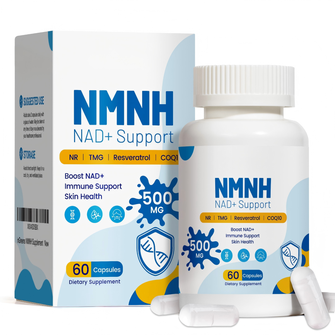
NMN: Mainstream and mature, mainly available in single-ingredient and compound formulations (blended with resveratrol / CoQ10); there are over 300 global brands; recognized by the U.S. FDA, Japan's Ministry of Health, Labour and Welfare and other authorities.
NMNH: Positioned in the high-end segment, featuring high efficiency and fast efficacy; priced 30%-80% higher than NMN; limited number of brands available.


NMN vs NMNH Cosmetics & Skincare Products
NMN: Main functions include anti-aging, DNA repair, brightening and fine line reduction; mature formula with good stability; widely applied in serums, creams, facial masks and eye creams.
NMNH: Highlights stronger antioxidant capacity, mitochondrial activation and skin barrier repair; targeted at high-end salon and functional skincare products with premium unit prices.

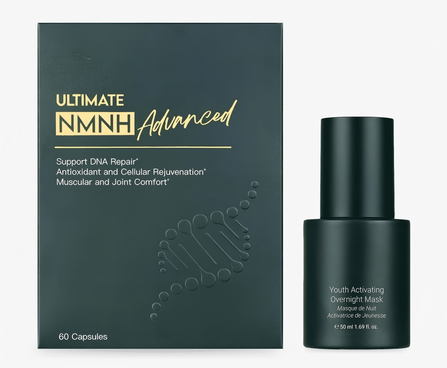
NMN and NMNH for Sale
Healthkintai® has been deeply engaged in the R&D and production of dietary supplement raw materials for over a decade with profound professional accumulation. Our R&D team has successfully mastered the core full-enzymatic production technology, so the quality of our NMN powder, NMN granules and NMH powder is fully controllable.
Our manufacturing plant strictly complies with GMP clean standards and supports large-scale mass production with a long-term stable and sufficient supply. Batch-specific COA certificates are available for every shipment, along with official MSDS documents. The company holds multiple internationally authoritative certifications, including HACCP and Halal, ensuring full compliance and reliable quality for global cooperation.
Welcome to contact us at health@kintaibio.com for our cooperation.
