

In a new industry cycle characterized by the dual focus on efficacy-driven skincare and green ingredients, chamomile extract is evolving from a classic, supporting soothing agent into a versatile active ingredient of strategic value in B2B formulation development. It is no longer merely a gentle label for products targeting sensitive skin; thanks to characteristic active molecules such as chamazulene, alpha-bisabolol, and apigenin-7-glucoside, its mechanisms of action are supported by extensive evidence ranging from the cellular level to clinical trials. For ingredient purchasers and product developers, selecting a supplier of stable, chamomile extract is a crucial foundation for creating market-competitive skincare products. A deep understanding of the sources, characteristics, and applications of chamomile extract enables companies to develop natural skincare formulations that align with market trends and meet the growing global consumer demand for plant-based skincare products.Contact us at info@kintaibio.com.
What is chamomile extract?
Chamomile extract is a natural active substance derived from the dried flower heads or whole plants of chamomile species belonging to the Asteraceae family. Its key active constituents include volatile oils (such as bisabolol and chamazulene), flavonoids (such as apigenin and luteolin), and phenolic acids; these components endow the extract with multiple pharmacological properties, including anti-inflammatory, antioxidant, and antimicrobial effects.
Depending on the extraction method employed,the resulting composition and concentration of active markers can vary significantly, allowing for tailored applications across different formulation systems.This versatility, combined with its well-established safety profile and compatibility with various skin types, has made chamomile extract a highly sought-after ingredient in the cosmetic, pharmaceutical, and nutraceutical industries, where it serves both therapeutic and preventative functions.

What does chamomile extract do?
The mechanism of action of chamomile extract involves a synergistic network of multiple targets and pathways, rather than the linear effect of a single constituent. Regarding inflammation, alpha-bisabolol and chamazulene directly inhibit the activity of cyclooxygenase and lipoxygenase, blocking the conversion of arachidonic acid into prostaglandins and leukotrienes; simultaneously, they downregulate the activation of the NF-κB signaling pathway and reduce the release of pro-inflammatory cytokines such as TNF-α and IL-1β, thereby curbing the inflammatory cascade at its source.

In terms of oxidative stress, flavonoids such as apigenin and luteolin utilize their phenolic hydroxyl structures to efficiently scavenge and neutralize free radicals (e.g., DPPH· and ABTS⁺·) and chelate transition metal ions to inhibit the Fenton reaction; concurrently, they upregulate the activity of endogenous antioxidant enzymes (such as SOD and GSH-Px) within skin cells, establishing a dual antioxidant defense system comprising both direct scavenging and indirect activation. Regarding barrier regulation, the extract enhances physical barrier integrity by promoting the expression of filaggrin and tight junction proteins in keratinocytes and accelerating the synthesis and orderly arrangement of the stratum corneum's lipid matrix.
Is chamomile extract good for skin?
Yes, chamomile extract is highly beneficial for the skin. Its primary value lies in providing gentle, multi-faceted care: it effectively soothes sensitivity, redness, and inflammation through ingredients like bisabolol and chamazulene; combats oxidative damage and delays photoaging via flavonoids; and simultaneously promotes barrier repair while reducing moisture loss. Furthermore, its natural origin and low-irritation profile make it suitable for a wide range of skin types, including sensitive, oily/acne-prone, and compromised skin.
What are benefits of chamomile extract for skin?
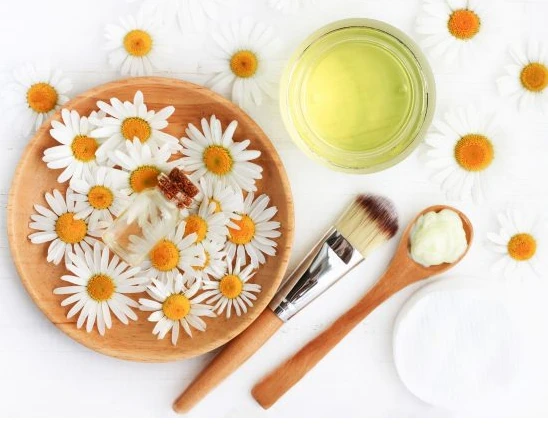
The skin benefits of chamomile extract can be systematically categorized into four core areas: soothing and anti-inflammatory action, antioxidant protection, barrier repair, and microbiome regulation. Regarding soothing and anti-inflammatory effects, alpha-bisabolol and matricin work synergistically to inhibit cyclooxygenase activity, effectively alleviating erythema, edema, and burning sensations caused by UV radiation or chemical irritation; this offers significant clinical value for sensitive skin, rosacea management, and post-procedure recovery.
In terms of antioxidant protection, apigenin-7-glucoside and chlorogenic acid form a free-radical scavenging network that delays collagen degradation, thereby reducing signs of photoaging such as fine lines and loss of firmness. Regarding barrier repair, the extract enhances the integrity of the stratum corneum and alleviates itching and stinging sensations.
At the microbiome level, its selective antimicrobial properties help inhibit the overgrowth of Cutibacterium acnes without disrupting beneficial commensal bacteria like Staphylococcus epidermidis, making it suitable for the daily maintenance of oily, acne-prone skin. Furthermore, recent research indicates potential for inhibiting tyrosinase activity, which can assist in addressing post-inflammatory hyperpigmentation. However, realizing the extract benefits depends on factors such as active ingredient concentration, transdermal delivery systems, and compatibility with other excipients; therefore, formulators must optimize the product based on the specific dosage form, target demographic, and intended claims to achieve the optimal balance between efficacy and safety.
chamomile extract skincare product in market
Skincare products containing chamomile extract now cover a comprehensive range of categories, from basic cleansing to intensive repair. In the facial care sector, common products include "SOS" ampoules and soothing serums featuring high concentrations of chamomile extract-designed to rapidly reduce redness and stabilize the skin during seasonal transitions-as well as creams and lotions that combine moisturizing and nighttime repair benefits; these often incorporate ingredients like niacinamide, squalane, or ceramides to synergistically strengthen the skin barrier. Regarding body care, hand creams represent the most mature and significant market segment; additionally, there are emollients and creams with high extract concentrations (e.g., 20%) specifically formulated for dry, sensitive skin across the entire body.

Among cleansing products, gentle chamomile-infused soaps and cleansers are suitable for the daily cleansing of dry, itchy, and sensitive skin due to their low-irritation properties. Liquid-based products include chamomile hydrosols and floral waters, obtained via distillation, which serve as facial mists or toners to help balance skin pH and provide immediate relief from irritation and redness.
Where to buy chamomile extract?
Choosing our chamomile extract powder means choosing a product backed by a comprehensive, quality control system. We fully understand the rigorous demands B2B clients place on raw material consistency, safety, and traceability; therefore, we implement strict controls from source to finished product. Our raw materials are carefully selected from prime chamomile-growing regions, such as Xinjiang, to ensure natural purity. Every batch undergoes rigorous HPLC testing and comes with complete reports covering heavy metals, microorganisms, and pesticide residues, meeting international standards such as ISO, HACCP, and HALAL. Additionally, we offer customizable extraction ratios and particle size specifications, alongside professional technical support and reliable supply assurance. Contact us at info@kintaibio.com.

FAQ
Q: Is apigenin the same as chamomile extract?
A: No, they are not the same. Apigenin is a single, chemically defined flavonoid compound (C₁₅H₁₀O₅) found in chamomile, while chamomile extract is a complex mixture containing apigenin, other flavonoids, terpenoids (bisabolol, chamazulene), and numerous other active constituents. Apigenin represents only one bioactive component, whereas the extract's overall effects result from synergistic actions among many compounds.
Q: Is chamomile extract good for skin?
A: Yes, chamomile extract is widely recognized for its skin benefits. It possesses potent anti-inflammatory, antioxidant, and soothing properties, primarily attributed to flavonoids and bisabolol. It effectively calms redness, irritation, and sensitivity, making it ideal for sensitive or reactive skin. Additionally, it supports skin barrier function, promotes moisture retention, and aids in soothing sunburn, minor wounds, and eczema-prone conditions when used in topical formulations.