




Ellagic Acid Powder Manufacturer/Supplier/Factory
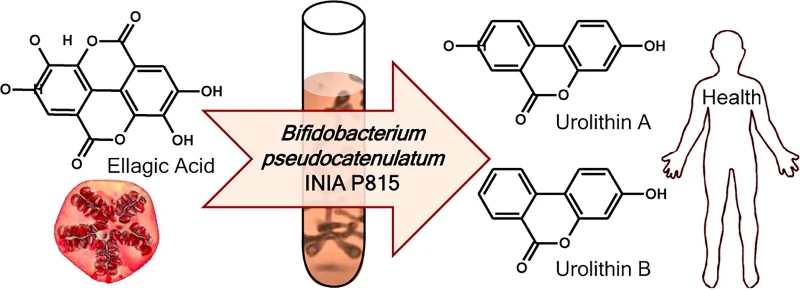
Ellagic acid is a plant-derived polyphenolic active ingredient commonly produced from pomegranate peel and Chinese gallnut. For skincare applications, ellagic acid features antioxidant properties and can inhibit tyrosinase activity. It assists in modulating uneven skin tone and pigment concerns and helps mitigate skin impacts caused by photo-aging, and is frequently incorporated into formulations of serums, creams and a wide range of skincare products. In the dietary field, once ellagic acid reaches the human gut, it is metabolized into urolithins. With its antioxidant characteristics, it is used as a raw material for manufacturing dietary supplements. This botanical active ingredient is mainly supplied to cosmetic manufacturers as well as dietary-supplement producers, and remains a high-demand plant-based raw material in the global marketplace.
Healthkintai® is a professional manufacturer and supplier of plant extracts from China. Our ellagic acid powder is sourced from pomegranate peel and Chinese gallnut. Adopting HPLC-standardized production processes, we offer multiple content grades of 40%, 90% and 98%. Customers may select flexibly according to their own formulation systems and cost-control requirements. Please find our best-selling specifications below. Feel free to contact us at health@kintaibio.com for further information.
|
Item |
Sources |
Specifications |
Test Method |
|
Ellagic acid powder |
Punica granatum peel |
40%, 90%, 98% |
HPLC |
|
Galla Chinensis |
40%, 90%, 98% |
||
|
Water-souble ellagic acid powder |
Punica granatum peel |
40%, 90% |
|
|
Ellagic acid dihydrate |
Punica granatum peel/ Galla Chinensis |
98% |
HPLC |


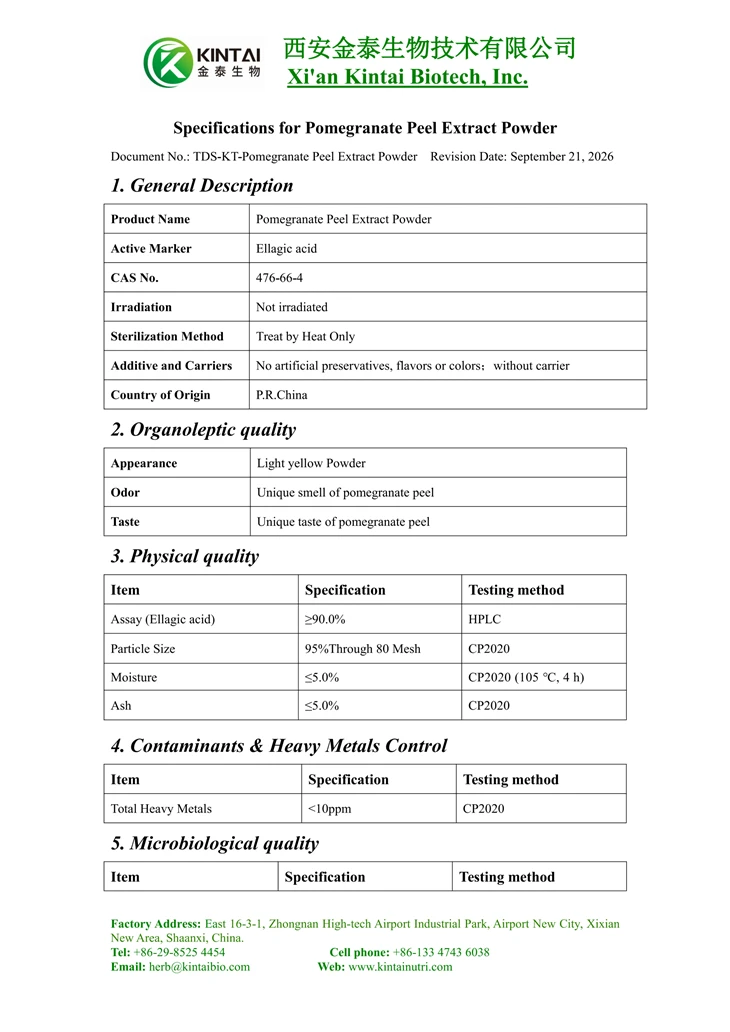
The Specifications for Ellagic Acid Powder from KINTAI


The COA of Ellagic Acid Powder from KINTAI

Ellagic Acid Solubility
Ellagic Acid Solubility in Ethanol
Ellagic acid is only sparingly soluble in ethanol at ambient temperature. For conventional crystalline ellagic acid, its solubility in ethanol at 25 °C is less than 1 mg/mL. Simply increasing temperature or applying sonication can only marginally improve solubility and cannot achieve complete dissolution at higher concentrations. Since there is no obvious pH-driven dissociative solubilization effect in ethanol systems, solubility cannot be improved by pH adjustment. Most commercial ethanol-based applications exist in the form of particulate dispersion, and it is difficult to obtain a clear ethanolic solution. Modified inclusion-complex ellagic acid can alleviate this limitation to some extent, yet it will alter the intrinsic properties of the raw material.
Ellagic acid Solubility in Water
Ellagic acid is practically insoluble in water at ambient temperature. Conventional crystalline ellagic acid exhibits an aqueous solubility of only 4-10 μg/mL at 25 °C. Elevating temperature yields limited improvement in solubility, and solubility further decreases under acidic conditions. Due to the dissociation property of its phenolic hydroxyl groups, increasing the system pH can improve water-solubility through phenolate formation. However, strongly alkaline conditions tend to trigger lactone ring-opening, oxidative discoloration and loss of activity, so long-term storage is not recommended. Most conventional aqueous systems take the form of fine-particle suspension and dispersion. Commercially-available water-soluble ellagic acid is mostly produced via cyclodextrin inclusion or sodium-salt modification.
Note:
Healthkintai® is staffed with an R&D team composed of professional post-graduates, focusing on the R&D and commercial implementation of modification processes for plant extracts. Addressing the common industry pain point of poor water-solubility for polyphenol-based raw materials, we have fully mastered and industrially implemented cyclodextrin encapsulation technology. Through encapsulation modification, the water-solubility of active substances is effectively enhanced and the application adaptability of raw materials is improved. We provide formula optimization, process debugging and customized product development services according to clients' real-world application scenarios and specification requirements. All clients are welcome for inquiries and business discussions at health@kintaibio.com.
Regulatory Status of Ellagic Acid
In the US
In the US, purified ellagic acid is governed under DSHEA for dietary‑supplement applications with no official FDA GRAS notice (GRN). Pomegranate extract complex has self‑GRAS declaration from industry, which does not cover high‑purity monomeric ellagic acid. For dietary supplements, pre‑market FDA approval is not required and manufacturers take full safety responsibility; disease‑related claims are prohibited. Ellagic acid is permitted for cosmetic use without pre‑approval from FDA.
In the EU
EU Cosmetics Regulation EC1223/2009 permits ellagic acid for use as a cosmetic ingredient. On the food side, ellagic acid occurring naturally in food matrices has a traditional consumption history, yet isolated high-purity monomeric ellagic acid obtained via hydrolysis has not secured Novel Food authorisation. Certain Member States may classify it as a novel-food substance, which requires completion of an EFSA safety assessment prior to oral application in food supplements. Pomegranate extract complexes dominate the commercial market.
Ellagic Acid vs. Urolithin A
Ellagic acid is a natural plant-derived polyphenol commonly found in pomegranate and galla chinensis. Urolithin-A is a bioactive metabolite produced by human gut microbiota through the metabolism of ellagic acid. Orally ingested ellagic acid exhibits relatively limited bioavailability; the majority of its parent form cannot directly enter the bloodstream. Biotransformation by gut microbiota is required to generate Urolithin-A with mitophagy-inducing activity.
It is worth noting that gut microbiome composition varies among individuals. Some people have poor conversion capacity, which may lower the production level of this active metabolite. Ellagic acid mainly functions in antioxidant defense and free-radical scavenging, while Urolithin-A focuses primarily on mitochondrial repair and triggering mitophagy. Even though they differ in source, absorption profile and primary action targets, these two compounds are inextricably linked in human metabolic pathways.
What Is Ellagic Acid Used for?
Ellagic Acid Antioxidant
Ellagic acid is a naturally-derived polyphenolic antioxidant active ingredient. It neutralizes reactive oxygen species such as hydroxyl radicals and superoxide anions and helps block lipid peroxidation chain reactions. Meanwhile, ellagic acid activates the Nrf2 antioxidant signaling pathway, stimulating human cells to produce more endogenous antioxidants including SOD and glutathione.
It mitigates NF-κB-driven inflammation-associated oxidative stress and reduces oxidative damage to cell membranes, proteins and DNA. Unlike ingredients that merely neutralize free radicals, ellagic acid delivers dual-action antioxidant benefits: it provides direct exogenous free-radical scavenging, and modulates cellular signaling pathways to trigger the body's own endogenous antioxidant defense system.
Ellagic Acid and Resveratrol
Ellagic acid and resveratrol are both plant-derived polyphenolic antioxidants. Both act on the NF-κB inflammatory signaling pathway and demonstrate antioxidant and restorative potential under in-vitro research conditions, enabling functional synergy between the two ingredients. Nevertheless, they differ in chemical classification and biological action pathways. As a dilactone-type polyphenol, ellagic acid exerts its effects mainly by activating the Nrf2 pathway. For skincare applications, it is notable for inhibiting tyrosinase activity to help ameliorate pigmentation. Free ellagic acid has limited oral bioavailability, so its precursor ellagitannins are generally preferred for oral use, where active constituents are released via gut microbial metabolism.
Resveratrol is a stilbene-type diphenylethylene compound. It centrally modulates the SIRT1-AMPK signaling pathway, focusing on mitochondrial repair and autophagy regulation, and is more suited for general photo-aging care with relatively modest pigment-inhibiting whitening efficacy.
Both active raw materials commonly suffer from poor water solubility and low chemical stability. Micro-encapsulation and light-shielded packaging are frequently adopted in cosmetic formulations to improve material performance.

Ellagic Acid for Weight Loss
Ellagic acid exerts anti-obesity beneficial effects via multi-target mechanisms. Firstly, it inhibits the differentiation and proliferation of pre-adipocytes, down-regulates the expression of key adipogenic factors such as PPARγ and C/EBPα, and reduces the activities of fatty acid synthase and lipoprotein lipase, thereby suppressing lipogenesis and mitigating in-vivo triglyceride accumulation.
Secondly, ellagic acid facilitates lipolytic metabolism, promotes the browning of white adipose tissue, and up-regulates UCP1 expression to strengthen mitochondrial thermogenesis and boost whole-body energy expenditure.
Furthermore, ellagic acid modulates gut microbiota dysbiosis induced by high-fat diets. Converted by human gut microbiota into active metabolites including urolithin A, it further mediates metabolic regulation. It also shows potential appetite-suppressing properties to lower food intake. Collectively, it delivers auxiliary benefits for fat reduction, weight management and amelioration of obesity-related metabolic disorders.

Ellagic Acid Benefits for Men
Ellagic acid polyphenol delivers multiple nutritional benefits for men. With powerful antioxidant properties, ellagic acid helps neutralize excess free radicals and alleviate cell damage caused by oxidative stress, supporting the body in managing chronic low-grade inflammation. For men who frequently stay up late and consume alcohol, ellagic acid serves as a dietary supplement to help reduce oxidative burden.
It provides antioxidant protection for prostate epithelial cells and assists in modulating local inflammatory responses, which is beneficial for maintaining normal physiological conditions of the prostate. Furthermore, it inhibits lipid peroxidation and mitigates oxidative impacts on vascular endothelium to help sustain balanced body metabolism. In addition, ellagic acid inhibits tyrosinase activity and offers antioxidant skin-care benefits, helping ease skin dullness in men resulting from prolonged sun exposure.
Ellagic Acid Benefits for Skin
Ellagic acid exhibits multi-dimensional biological activities in skin-care applications. It effectively scavenges free radicals and reduces oxidative-stress-induced damage to skin cells. Meanwhile, it protects elastic fibers from premature degradation by inhibiting elastase activity, with studies reporting an elastase inhibition rate of up to 88.26%.
Ellagic acid for skin whitening: ellagic acid features high affinity for copper ions at the active site of tyrosinase. It suppresses tyrosinase activity via copper chelation to block melanin production, and delivers positive effects on sun spots, chloasma and post-inflammatory hyperpigmentation.
Furthermore, ellagic acid possesses anti-inflammatory and skin-supporting properties. It lowers the secretion of inflammatory factors such as IL-6 and TNF-α and supports normal fibroblast function to facilitate skin recovery. In terms of anti-photo-aging performance, ellagic acid shows strong absorption across the full UV spectrum. It helps prevent UV-triggered DNA damage and mitigates skin tissue damage resulting from prolonged ultraviolet exposure.

Ellagic Acid Uses
Ellagic Acid Supplement
Ellagic acid is widely used in overseas dietary supplement field. Upon entering the human digestive tract, this ingredient is metabolized by gut microbiota into urolithin-type metabolites, which serve as the core mediators for its antioxidant and inflammatory-pathway-modulating effects. Standardized plant-extracted ellagic acid powder is generally adopted as raw material in supplements, focusing on cellular antioxidant support to help resist oxidative stress. It should be noted that individual differences in gut microbiota directly affect the conversion efficiency of urolithins.


Ellagic Acid in Skincare Products
Ellagic acid is a commonly-used plant-derived active ingredient in the cosmetics industry. It is incorporated into various skincare formulations to help mitigate dullness, even out overall skin tone and relieve discomfort caused by skin oxidation. As a natural polyphenol, it neutralizes free radicals and modulates cutaneous inflammatory responses, helping ease oxidative stress triggered by UV exposure and reduce skin impacts associated with photoaging.
Standardized plant-extracted ellagic acid powder is widely adopted as the active raw material in skincare products. Constrained by its inherent physicochemical properties, this ingredient features poor water-solubility and relatively limited skin-penetration capacity. For this reason, many commercial formulations employ encapsulation delivery technology to improve the efficacy of the active agent.


Where to Buy Ellagic Acid?
Healthkintai® is a professional manufacturer and supplier of botanical extracts, dietary supplement ingredients and cosmetic raw materials. We offer ellagic acid from two sources: pomegranate peel and gallnut.
Our full production process is operated under strict GMP compliance with no harmful chemical solvents added. We supply ellagic acid powder in purity ranging from 40% to 98%. With our proven cyclodextrin encapsulation technology, we also deliver water-soluble grades to resolve formulation difficulties for water-based cosmetics and nutritional products.
Microbial and heavy-metal test values are stated on each batch COA, all complying with relevant specifications. Beyond ellagic acid, our pomegranate peel extracts and gallnut extracts feature a wide range of other active constituents to meet diverse project requirements. Please feel free to contact us at health@kintaibio.com for further technical information and custom-made solutions.

FAQ
Q: How much ellagic acid per day?
A: There is no established unified recommended daily intake level for ellagic acid. Ellagic acid can be obtained naturally from common foods such as pomegranates and berries. Actual dosages in dietary supplements vary significantly depending on product formulations. Individual gut microbiota conditions affect the metabolic conversion of ellagic acid into urolithins, which leads to variable user-experienced outcomes. Available research has not fully defined a safe and effective daily intake, and high-dose self-supplementation is not advised.
Q: How to absorb ellagic acid?
A: Human direct absorption of ellagic acid itself is relatively limited. Most ingested ellagic acid is not absorbed directly in the small intestine but travels to the large intestine, where gut microbiota converts it into urolithin-type metabolites, which are the primary substances absorbed and utilized by the human body. Variations in individual gut-microbiota composition result in differing conversion levels. Dietary patterns may also indirectly influence the gut microenvironment and alter metabolic efficiency.
Hot Tags: ellagic acid powder, China ellagic acid powder manufacturers, suppliers, factory, Ceramide Powder, Hyaluronic Acid Powder, Tetrahydrocurcumin Powder, Quillaja Saponaria Soap Bark Extract, copper peptide ghk powder, Gotu Kola Extract Powder


