

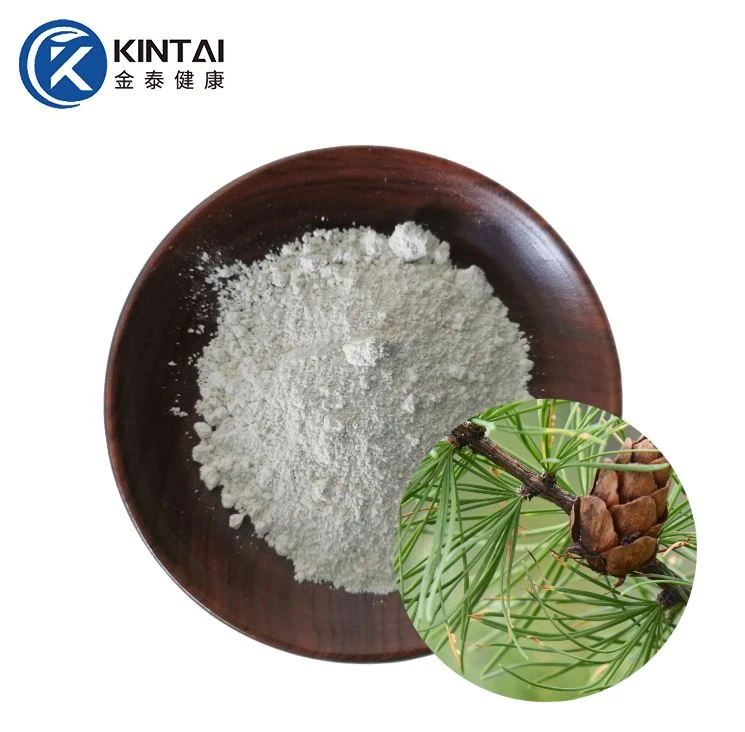




Taxifolin Dihydroquercetin Powder Manufacturer/Supplier/Factory
Dihydroquercetin (also known as Taxifolin, DHQ) is a natural dihydroflavonol active substance. Commercially, it is mainly extracted from the roots and bark of larch. It exerts potent antioxidant and anti-inflammatory effects, capable of scavenging free radicals, protecting vascular endothelium, helping improve microcirculation, alleviating oxidative damage and supporting liver function. At present, it is widely applied in dietary supplements and functional foods. It can also be used as a natural antioxidant additive for food preservation, and incorporated into skincare products for anti-aging and skin repair. In addition, it has broad development prospects in pharmaceutical research and animal nutrition feed sectors.
Healthkintai® supplies naturally sourced Taxifolin. No additional chemically synthesized additives are incorporated throughout production, and the maximum product purity can reach 99%. Multiple specifications are available, please refer to the table below for details. Feel free to contact us anytime at health@kintaibio.com for complete technical documents and accurate quotations of our bulk Taxifolin Dihydroquercetin Powder.
|
Active Ingredients |
Specifications |
Test Method |
|
Taxifolin/Dihydroquercetin/DHQ |
85%, 90%, 95%, 98%, 99% |
HPLC |


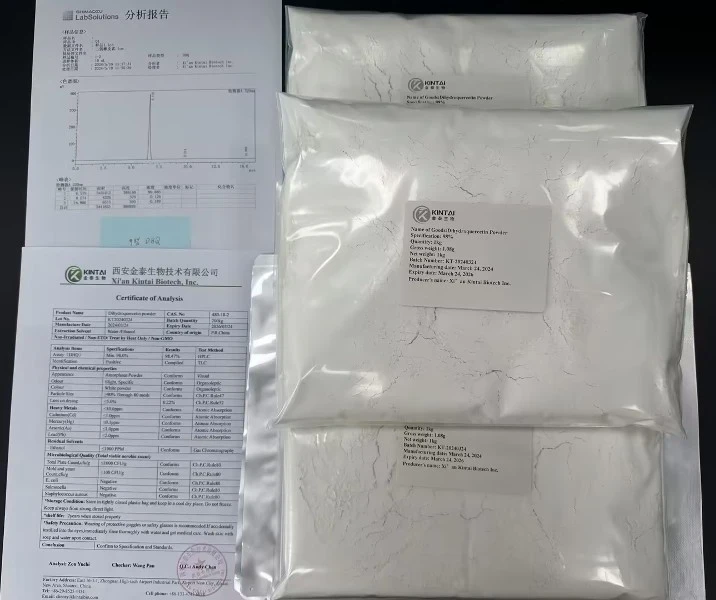
The COA of Taxifolin Dihydroquercetin Powder


Dihydroquercetin Taxifolin Solubility
Freely soluble: Highly soluble in ethanol, acetic acid, and dimethyl sulfoxide (DMSO). In DMSO, the solubility can reach 56–60 mg/mL; in ethanol, it is similarly 56–60 mg/mL.
Soluble: Soluble in boiling water, but sparingly soluble or practically insoluble in cold water. At room temperature, its aqueous solubility is approximately 0.87–1.2 mg/mL. According to the European Pharmacopoeia, it is classified as "very slightly soluble" in water at room temperature.
Insoluble: Practically insoluble in non-polar solvents such as benzene and chloroform.
What Is the Source of Dihydroquercetin?
Taxifolin dihydroquercetin is widely distributed in nature. It can be detected in onions, citrus fruits, grapes, milk thistle and various coniferous trees. However, its content in most fruits, vegetables and herbs is extremely low, making large-scale industrial extraction uneconomical. This compound was first isolated and identified from Douglas fir bark, yet Douglas fir is no longer adopted as a raw material for mass production due to insufficient content and high costs.
At present, natural taxifolin supplied by Healthkintai® is mainly extracted from the roots and sapwood of Siberian larch. Besides plant extraction, semi-synthetic taxifolin produced via catalytic hydrogenation of quercetin is also available on the market. Nevertheless, natural extracts derived from larch enjoy more comprehensive international regulatory support.


Regulatory Status of Taxifolin Dihydroquercetin
Taxifolin Dihydroquercetin extracted from larch is widely recognized for its safety for consumption in major markets, with a generally recommended maximum daily intake of 100 mg for adults in dietary supplements. The EU and the US have well-defined compliance pathways, whereas markets including Canada, Australia, Japan and South Korea impose stricter access requirements; in most of these regions, it is permitted primarily in dietary supplements with restrictions on addition to conventional foods. It is widely allowed for cosmetic applications and not subject to food regulations.
The USA
In the US market, taxifolin (dihydroquercetin) may be used as a dietary ingredient in dietary supplements under the Dietary Supplement Health and Education Act (DSHEA). It can also be added to conventional foods such as non-alcoholic beverages, fermented milk and chocolate within specified dosage limits. Regulation maintains two separate compliance tracks for dietary supplements and conventional foods.
The EU
The EU has only approved larch-derived taxifolin (dihydroquercetin) extract for inclusion on the Novel Food list; chemically synthesized pure taxifolin monomer has no standalone Novel Food authorisation. Regulations set a maximum daily intake of 100 mg for adults in dietary supplements, prohibit use for individuals under 14 years of age, and permit its addition to categories including dairy products, chocolate and non-alcoholic beverages at specified concentrations.
Dihydroquercetin Vs Quercetin
Dihydroquercetin is a hydrogenated reduction derivative of quercetin. Both belong to natural flavonoids, share the same 3,5,7,3',4'-pentahydroxyflavone parent nucleus structure, and have basic biological activities including antioxidant, anti-inflammatory, immune regulation and cardiovascular protection. The core difference lies in that the C2-C3 double bond on the C-ring of dihydroquercetin is hydrogenated and saturated; this structural change brings significant differentiation, endowing it with unique advantages in pharmaceutical formulation development and intervention of specific diseases.


|
Comparison Dimension |
Quercetin |
Dihydroquercetin (Taxifolin) |
|
CAS Number |
117-39-5 |
480-18-2 |
|
Water Solubility |
Extremely poor (≈0.013 mg/mL); free form is hardly soluble in water, leading to poor absorption on empty stomach |
Greatly improved (≈0.8–1 mg/mL); low formulation difficulty |
|
Bioavailability |
Extremely low (<5%); requires phosphatidylcholine complex/phytosome or glycoside forms to improve absorption |
Significantly better; no complex carriers required, good solubility and slower first-pass metabolism |
|
In Vivo Conversion Profile |
Dihydroquercetin is not extensively converted to quercetin in the human body; the two are independent active molecules |
|
|
Preferred Use Scenarios |
Daily respiratory protection, seasonal allergy relief, daily antioxidant supplementation with budget constraints |
Those concerned about vascular elasticity, varicose veins, fundus blood supply, peripheral circulation, liver support, and people with weak gastrointestinal health |
Dihydroquercetin Vs Quercetin Dihydrate
Dihydroquercetin (taxifolin) is a flavanohol obtained by hydrogenating the C2-C3 double bond of quercetin, while quercetin dihydrate is a flavonol carrying two molecules of crystal water. The two share similar parent nuclei yet differ in structure.
Quercetin dihydrate features extremely poor water solubility and an intact molecular conjugated system, delivering prominent free radical scavenging capacity in vitro but suffering from low stability and oral bioavailability.
In contrast, dihydroquercetin boasts superior water solubility and chemical stability along with better in vivo absorption. Its antioxidant effect focuses on long-term protection and vascular endothelial maintenance, whereas quercetin dihydrate is more applied in immune regulation and inflammatory pathway intervention. Distinctions also exist in raw material sources and applicable formulation scenarios.
What Are the Benefits of Taxifolin Dihydroquercetin?
Dihydroquercetin Antioxidant Properties
Taxifolin dhq contains multiple phenolic hydroxyl groups and a catechol structure on the B-ring, exerting antioxidant activity through multiple pathways.
Firstly, it donates hydrogen atoms to scavenge reactive oxygen species including hydroxyl radicals, superoxide anions and peroxynitrite. Meanwhile, it chelates metal ions such as iron and copper to reduce catalytic free radical generation, interrupt the lipid peroxidation chain reaction in cell membranes, and mitigate oxidative stress damage to lipids, proteins and DNA.
Secondly, it modulates the Nrf2/ARE antioxidant signaling pathway, facilitating the translocation of Nrf2 into the cell nucleus to upregulate the expression of endogenous antioxidant and detoxifying proteins including HO-1, SOD and glutathione, thereby strengthening cellular intrinsic antioxidant defense.
Thirdly, it regulates the NF-κB-related inflammatory pathway to alleviate persistent inflammatory responses triggered by oxidative stress. Through the combined effects of free radical scavenging, enhancement of cellular endogenous antioxidant defense and synergistic inflammation relief, it helps protect vascular endothelial health, inhibit low-density lipoprotein oxidation, relieve mitochondrial oxidative damage, balance tissue oxidative-inflammatory status and sustain normal cell viability. This further supports cardiovascular maintenance, liver health, neurological function, microcirculation improvement, and aids in slowing cellular aging.

Dihydroquercetin Liver
Dihydroquercetin scavenges reactive oxygen species produced during hepatic metabolism via phenolic hydroxyl groups. Meanwhile, it activates the Nrf2/ARE signaling pathway to upregulate endogenous antioxidants such as glutathione and HO-1 as well as phase II detoxification systems, alleviating lipid peroxidation and mitigating mitochondrial damage.
It inhibits the NF-κB signaling pathway to reduce the secretion of pro-inflammatory factors including TNF-α and IL-6, relieving persistent inflammatory stimulation. By modulating the TGF-β1/Smad pathway, it suppresses hepatic stellate cell activation, reduces collagen accumulation and slows the progression of hepatic fibrosis. In addition, it regulates hepatocyte lipid metabolism and inhibits hepatocyte apoptosis.
Through multiple mechanisms, it alleviates liver damage induced by alcohol, high-fat diets and various toxins, preserves intact hepatocyte structure and supports the liver's normal metabolic and detoxification functions.

Reference: https://www.mdpi.com/1420-3049/29/15/3537
Glycemia and Taxifolin Dihydroquercetin
Dihydroquercetin supports healthy blood glucose homeostasis through multiple synergistic biological pathways. It activates the PI3K/Akt and AMPK signaling pathways, facilitating the translocation of GLUT4 transporters to the cell membrane in skeletal muscle and adipocytes, thereby promoting the uptake and utilization of blood glucose in peripheral tissues. Meanwhile, it inhibits key hepatic gluconeogenic enzymes (G6Pase, PEPCK) to reduce hepatic glucose output.
In addition, with potent antioxidant and anti-inflammatory properties, dihydroquercetin activates the Nrf2 pathway and suppresses the JNK/NF-κB inflammatory cascade. This alleviates damage to insulin receptor substrate IRS-1 induced by oxidative stress and chronic inflammation, which helps improve insulin sensitivity. It also protects pancreatic β-cells against apoptosis and assists in stabilizing insulin secretion. Collectively, these multi-target mechanisms support healthy glucose metabolism.

Reference: https://pmc.ncbi.nlm.nih.gov/articles/PMC10227600/
Taxifolin Dihydroquercetin Uses
Taxifolin Market
Taxifolin is a highly active natural flavonoid raw material. The global market maintains steady expansion. Its market size reached USD 120 million in 2024 and is projected to grow to USD 320 million by 2032, representing a compound annual growth rate (CAGR) of 7.8% from 2026 to 2032. Downstream demand is concentrated in the dietary supplement markets of Europe and North America, with applications spanning antioxidant support, cardiovascular care, liver health, and skin repair.

Reference: https://www.verifiedmarketreports.com/product/taxifolin-market/
Dihydroquercetin Supplement
Our Taxifolin extracted from larch is mainly supplied in 90%, 95% and 98% purity grades. It is widely formulated into soft capsules, tablets and powders, primarily positioned for cardiovascular support, protection against chemical liver injury, systemic antioxidant and anti-ageing effects, joint comfort and immune modulation. Target markets include elderly health support, liver care for people with irregular late-night schedules, sports nutrition and chronic disease prevention. It is frequently combined with NMN, resveratrol, Omega-3 and silymarin, serving as a core ingredient among natural flavonoid dietary supplements.


Dihydroquercetin Food Additives
Taxifolin can be a natural antioxidant to replace synthetic antioxidants. It is applied in animal and vegetable oils, nuts, meat products, dairy products, chocolate, fruit juices and fermented beverages, effectively inhibiting lipid rancidity, extending shelf life and stabilizing food color. Meanwhile, it can be incorporated as a nutritional fortifier into functional beverages, grain bars and meal replacement foods.


Dihydroquercetin Skincare Products
Taxifolin is suitable for formulations of serums, creams, sunscreens, after-sun care products, soothing facial masks and hair & body care products, offering multiple skincare benefits. It can be used in anti-aging, redness relief & skin repair, brightening & evening skin tone, and gentle sun protection lines. It is also extended to hair care items to alleviate scalp oxidative stress and improve the inflammatory condition of the scalp.


Vitamin C with Dihydroquercetin
What is vitamin C with dihydroquercetin?
Vitamin C is a water-soluble vitamin, while taxifolin (dihydroquercetin) is a natural flavonoid antioxidant. They differ in chemical structures and function in distinct environments. Vitamin C mainly scavenges free radicals in aqueous phases and participates in collagen synthesis. Taxifolin has both hydrophilic and lipophilic properties. It acts on cell membranes and inhibits lipid peroxidation. Supplementing either ingredient alone leads to limited antioxidant coverage.
These two ingredients form an effective antioxidant synergistic cycle. Taxifolin preferentially eliminates free radicals, slowing the oxidative degradation of vitamin C and extending its active duration. Taxifolin oxidized by free radicals can be regenerated via vitamin C to sustain antioxidant activity. This creates a synergistic cycle that delivers protective effects unattainable by a single ingredient.
The two substances complement each other in physiological functions. Vitamin C supports healthy immune function and maintains the integrity of vascular basement tissues. Taxifolin helps regulate capillary permeability and mitigate excessive inflammatory responses. Combined supplementation addresses both aqueous-phase free radical damage and lipid oxidation stress on cell membranes, making them a popular pairing in complex antioxidant formulations.


Where to Buy Taxifolin Dihydroquercetin Powder?
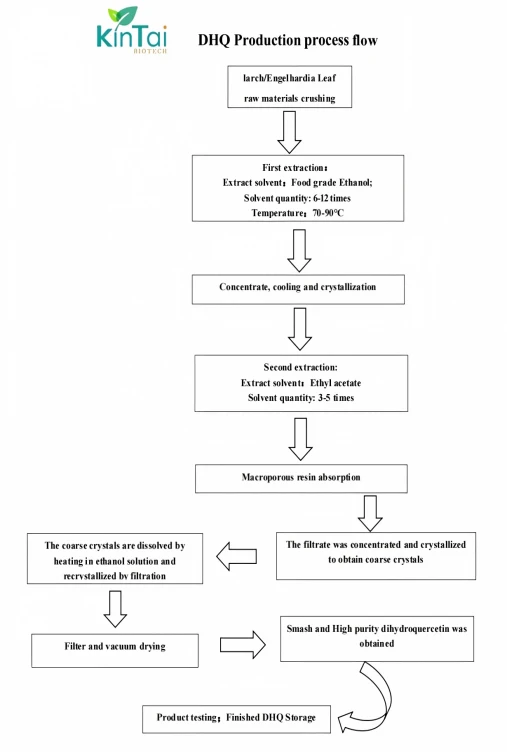
Healthkintai® has more than ten years of experience in plant extract production and is staffed with a professional R&D team. We supply wholesale Taxifolin Dihydroquercetin powder manufactured without any chemical additives and contains no harmful solvent residues.
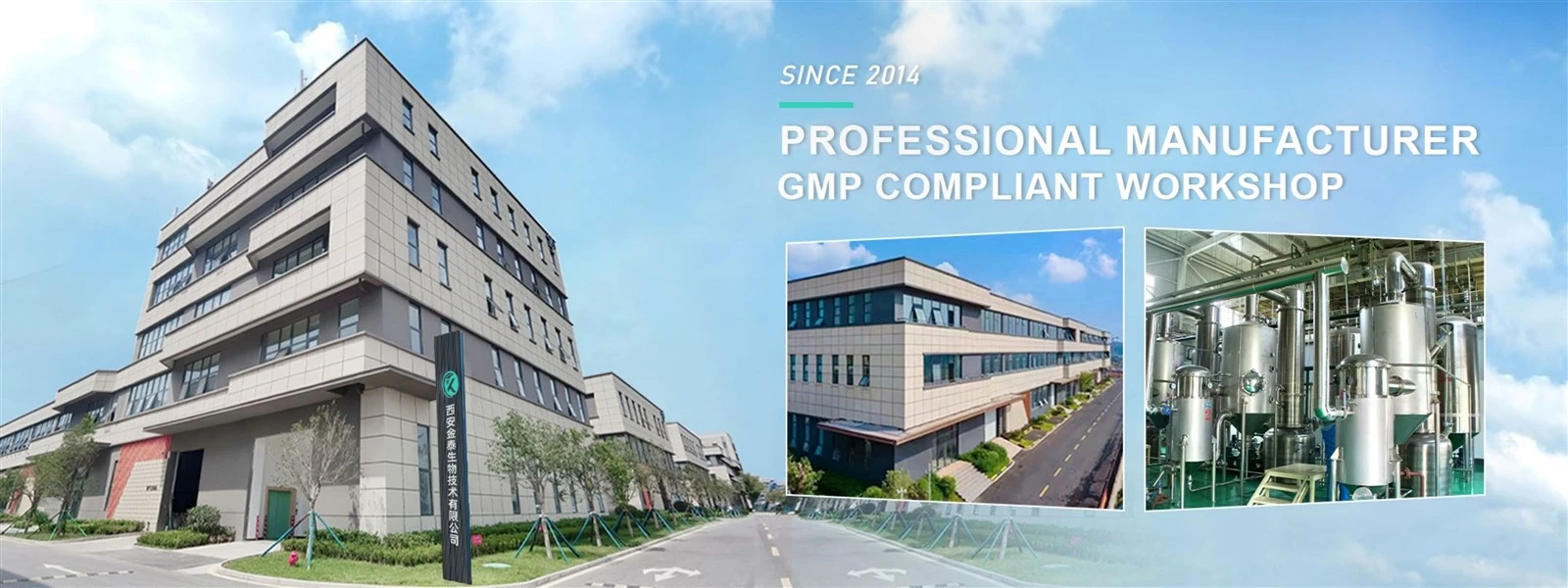
Our facility complies with GMP standards and has obtained Halal and HACCP certifications. The minimum order quantity is 1kg, available for trial orders and small-batch purchases.
Feel free to contact us at health@kintaibio.com for cooperation and sample requests.
FAQ
Q: Is dihydroquercetin the same as quercetin?
A: Dihydroquercetin and quercetin are not the same substance. They share similar structures but differ in oxidation state. Quercetin is a flavonol with a double bond in its molecular structure, whereas dihydroquercetin is a dihydroflavonol whose double bond is reduced by hydrogenation. It features superior chemical stability and lipophilicity, and generally exhibits better bioavailability than quercetin. Although both exert antioxidant and anti-inflammatory effects via similar mechanisms, their activity priorities vary. Additionally, there are notable distinctions between them in metabolic pathways in vivo, applicable scenarios and relevant regulatory classifications, so they cannot be treated as interchangeable alternatives.
Q: What is dihydroquercetin used for?
A: Dihydroquercetin is a natural flavonoid. It can directly scavenge free radicals, activate the Nrf2 pathway to boost the body's intrinsic antioxidant capacity, inhibit lipid peroxidation and alleviate oxidative stress damage. Meanwhile, it exerts anti-inflammatory effects by blocking the NF-κB pathway, protects vascular endothelium, reduces oxidation of low-density lipoprotein, assists in improving microcirculation and lowering the risk of thrombosis. It also exhibits multiple biological activities including hepatoprotection, neuroprotection, immune regulation, antibacterial and antiviral effects, and alleviates chronic inflammation and apoptosis in multiple organs. Most of these effects remain at the experimental research stage and cannot replace pharmaceutical treatment for diseases.
Hot Tags: taxifolin dihydroquercetin powder, China taxifolin dihydroquercetin powder manufacturers, suppliers, factory, Berberine Hydrochloride Powder, lysine hcl powder, marigold lutein zeaxanthin, melatonin in powder form, natural vs synthetic melatonin, organic olive leaf powder for dogs


