



1-DNJ Powder Manufacturers and Suppliers
Healthkintai® is a manufacturer and supplier of 1-DNJ. DNJ (1-deoxynojirimycin), is a natural alkaloid primarily derived from the leaves of the mulberry tree (Morus alba), a member of the Moraceae family. It typically exists in free or hydrochloride form. As a potent α-glucosidase inhibitor, DNJ competitively inhibits carbohydrate-degrading enzymes such as maltase and sucrase in the intestine, thereby slowing glucose absorption and effectively reducing postprandial blood glucose spikes. Therefore, it is widely used in diabetes management and blood glucose control. We offer 1% and 5% DNJ, and 99% DNJ HCl. Other specifications can also be customized. Contact us at info@kintaibio.com.

CLICK HERE TO GET A QUOTE NOW>>>
Relevant regulations
There are significant differences between the US FDA and the EU EFSA regarding the regulatory requirements for mulberry leaf extract (containing DNJ): In the US, it can be marketed as a general food ingredient or dietary supplement through the GRAS (Generally Recognized As Safe) process, and there are already cases such as GRN No. 894, which allow it to be added to various food products such as energy bars, beverages, and yogurt (recommended dosage per serving of 120-294 mg). Companies can organize their own expert evaluations before selling the product without prior FDA approval. In the EU, however, to claim health benefits, an additional, extremely stringent EFSA health claim application is required.
mulberry leaf and lemon extract
Moranoline(primarily standardized as DNJ, or 1-deoxynojirimycin) and lemon extract (typically rich in flavonoids, vitamin C, and citric acid, among other bioactive components) are often used in combination in functional foods or dietary supplements. They do not overlap or compete in function, but rather work synergistically.


Specifically,DNJ powder, as a potent α-glucosidase inhibitor, can slow the breakdown and absorption of carbohydrates in the intestines, effectively inhibiting the sharp rise in postprandial blood glucose. Lemon extract powder, through its rich flavonoid components (such as sennatin and hesperidin), exerts an auxiliary effect through another pathway, including enhancing insulin sensitivity, reducing oxidative stress, improving lipid metabolism, and to some extent alleviating the intestinal discomfort that DNJ may cause.
Furthermore, the organic acids in lemon can regulate the gastrointestinal environment, potentially helping to improve the stability and bioavailability of DNJ. Therefore, compared to using bulk DNJ Extract alone, the combination of mulberry leaf and lemon extract provides a more comprehensive solution for achieving more holistic blood glucose management, weight control, and metabolic health support.
1-DNJ vs berberine
Both DNJ and berberine are natural active substances commonly used to regulate metabolism, especially blood sugar, but their mechanisms of action and applicable scenarios differ significantly. The core active ingredient in mulberry leaf is 1-deoxynojirimycin (DNJ), which primarily works in the intestines, resulting in a relatively mild effect and fewer gastrointestinal side effects. Berberine, on the other hand, can be absorbed into the bloodstream. Its overall blood sugar and lipid-lowering efficacy is generally stronger, even considered comparable to the first-line hypoglycemic drug metformin; however, its oral absorption rate is extremely low, often requiring higher doses or divided administration, and it is more likely to cause gastrointestinal adverse reactions such as constipation, diarrhea, and bloating.
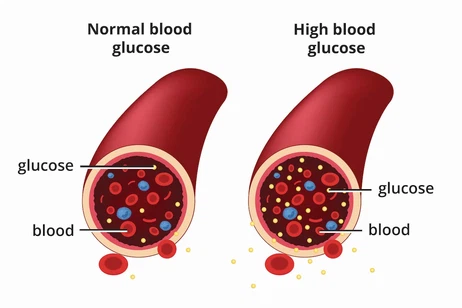
In short, if the primary goal is to control postprandial blood sugar fluctuations and prevent the progression of prediabetes, with fewer side effects, Moranoline is a gentler choice. However, if type 2 diabetes has been diagnosed with hyperlipidemia or fatty liver, requiring systematic intervention in blood sugar, lipids, and weight, and provided the gastrointestinal reactions are tolerable, berberine may offer higher overall benefits.
1 deoxynojirimycin benefits
1-dNJ for blood sugar
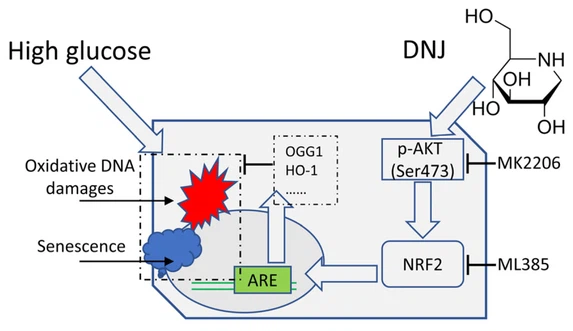
The core efficacy of mulberry leaf extract in regulating blood sugar lies in its ability to effectively control the sharp rise in postprandial blood sugar. Its main active ingredient is 1-deoxynojirimycin (DNJ), a potent alpha-glucosidase inhibitor. It not only significantly reduces postprandial blood sugar spikes and fluctuations but also alleviates the burden on pancreatic β-cells, playing a positive role in improving insulin sensitivity and preventing the progression of prediabetes to type 2 diabetes. Compared to some potent hypoglycemic drugs, mulberry leaf extract powder has a milder effect, a very low risk of hypoglycemia when used alone, and fewer side effects such as gastrointestinal discomfort, making it highly suitable as an adjunct intervention for individuals with prediabetes or mild hyperglycemia.
DNJ for weight loss
The weight loss benefits of DNJ extract are primarily indirect, rather than directly burning fat. Its core mechanism is related to blood sugar and metabolism regulation: First, the active ingredients in mulberry leaves (such as 1-deoxynojirimycin) inhibit the breakdown and absorption of carbohydrates in the intestines, reducing the amount of glucose entering the bloodstream after meals, thereby lowering excessive insulin secretion stimulated by blood sugar spikes. Once insulin levels stabilize, the body is more inclined to break down fat for energy, while reducing the tendency to convert excess sugar into fat for storage.
Moranoline for acne
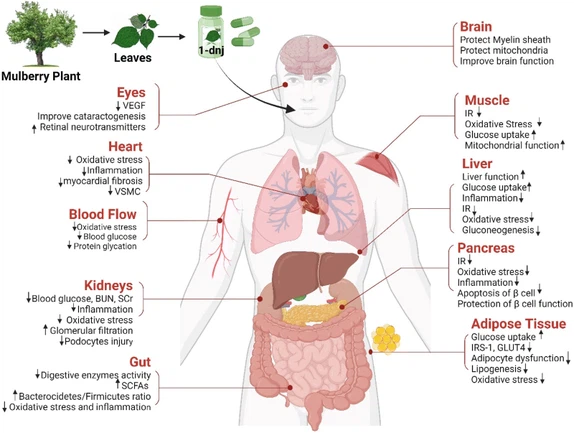
The extract offers numerous beneficial effects on the skin, particularly in whitening, anti-oxidation, promoting healing, and anti-inflammation. Its phenolic compounds and active ingredients effectively inhibit tyrosinase activity, resulting in whitening and fading of dark spots. Simultaneously, its rich antioxidant components scavenge free radicals, protecting skin cells from oxidative stress damage. Furthermore, it exhibits anti-hyaluronidase activity, helping to maintain skin structural stability and potentially improving inflammatory skin problems such as eczema.
deoxynojirimycin uses
1 deoxynojirimycin supplement
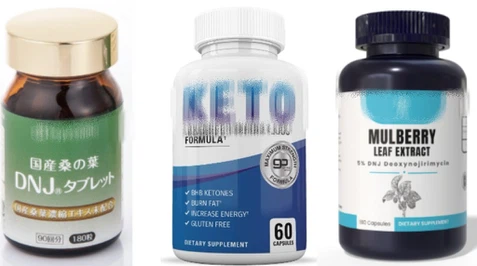
For individuals with abnormal blood glucose metabolism and those managing weight, deoxynojirimycin (DNJ) is often available in compound formulation tablets or capsules. These products have standardized DNJ content per unit dose to ensure stable bioactivity. In terms of formulation design, it is often combined with buckwheat extract (rich in rutin), pueraria isoflavones, astragalus polysaccharides, and chromium. Most products are GMP certified and are recommended to be taken with main meals, especially for blood glucose control after high-carbohydrate diets. In addition, some sports nutrition brands also incorporate it into fat-burning capsules, utilizing its ability to slow sugar absorption to promote fat metabolism and meet the body management needs of fitness enthusiasts.
1-DNJ tea
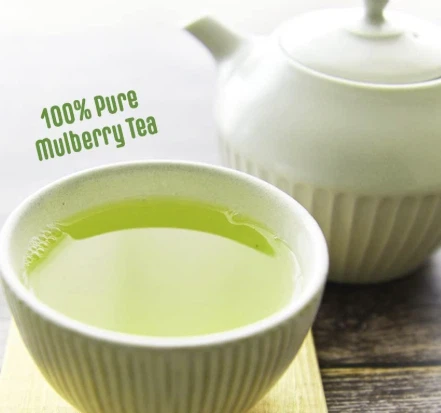
DNJ is widely incorporated into daily diets, with mulberry leaf tea being the most representative product. It is also added to compressed candies, meal replacement biscuits, oatmeal, gummies, and sugar-free beverages, targeting the public as a low-glycemic index food. These products emphasize taste and convenience, making them suitable as daily snacks or pre-meal drinks. They help healthy individuals and those with early-stage hyperglycemia achieve blood sugar management naturally without changing their dietary habits. Furthermore, because DNJ Powder is derived from natural mulberry leaves, long-term consumption is well-tolerated.
deoxynojirimycin side effects
As a naturally derived functional ingredient, deoxynojirimycin (DNJ) has an extremely high safety profile at recommended doses. The scientific basis for this safety lies in its rapid metabolism in vivo (approximately 80% excretion within 48 hours) and the absence of serious adverse reactions observed in high-dose human trials (up to 1000 mg). In practical applications, a small number of individuals may experience mild gastrointestinal discomfort such as bloating. The real risk that users need to be wary of is allergic reactions to the mulberry leaf raw material, rather than the toxicity of DNJ itself.

where to buy 1-DNJ Powder?
Choosing our DNJ powder offers the core advantage of stable and precisely controllable quality. We employ standardized production processes to ensure that the DNJ content in every batch strictly meets standards. The raw material comes from mulberry leaves grown on our own plantation, free from pesticide residues and heavy metal contamination. Our water extraction process maximizes the preservation of 1-DNJ's bioactivity while removing anti-nutritional factors such as phytic acid, improving absorption rates. Furthermore, we offer customized particle size and solubility solutions to suit various dosage forms, including tablets, capsules, and solid beverages. Contact us at info@kintaibio.com.

FAQ
Q: What is the structure of 1-DNJ?
A: The chemical structure of DNJ resembles that of glucose except that the oxygen atom of the pyranose ring in glucose is replaced with an imino group (−NH−). The pyranose ring has a hydroxymethyl (−CH2OH) moiety and three hydroxyl (−OH) groups.
Q: How does DNJ work in the body?
A: DNJ (1-deoxynojirimycin) in mulberry leaf works by inhibiting alpha-glucosidase enzymes in the small intestine. This delays the breakdown and absorption of dietary carbohydrates, thereby suppressing post-meal blood sugar spikes. It also shows some activity against viral glycoprotein processing.
Hot Tags: 1-dnj powder, China 1-dnj powder manufacturers, suppliers, factory


