

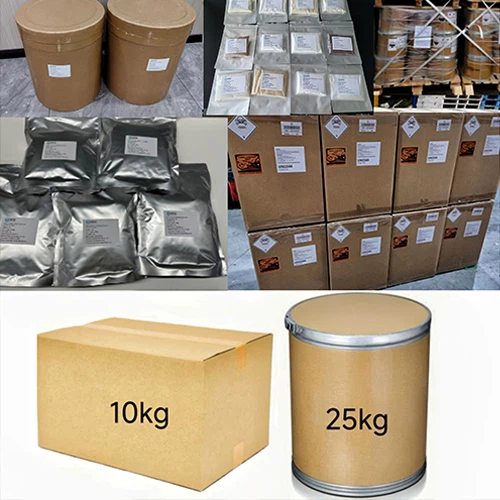
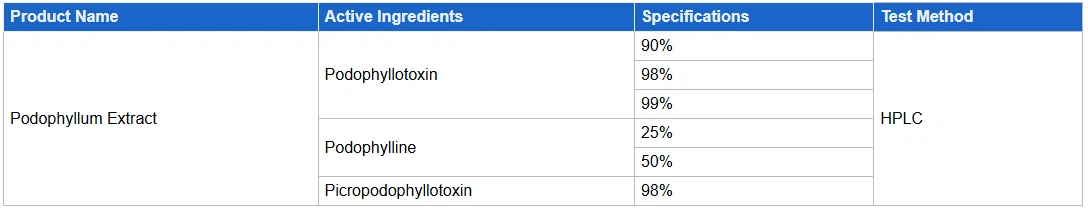
Podophyllum Resin Podophyllin Powder Manufcutuers and Suppliers
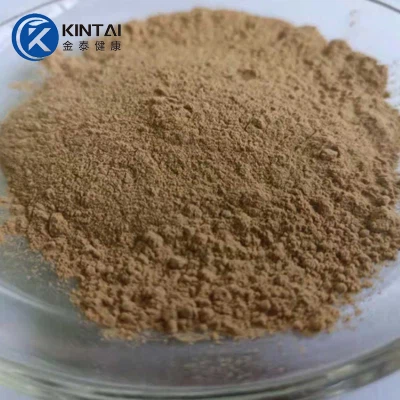
Healthkintai® is a manufacturer and supplier of podophyllum resin. Podophyllum resin is a natural resin mixture extracted from the rhizome of the Himalayan podophyllum (Podophyllum hexandrum). It appears as a light brown to greenish-yellow lumps or amorphous powder. The main active ingredient of this resin is podophyllotoxin. Podophyllin has strong cytotoxic effects; its mechanism of action involves the active ingredient binding to tubulin, blocking cell mitosis, and thus inhibiting cell proliferation. Based on this pharmacological property, podophyllum resin is mainly used clinically for the topical treatment of skin lesions such as condyloma acuminata and verruca vulgaris. It is also a key starting material for the semi-synthetic antitumor drugs etoposide and teniposide. For wholesale podophyllum resin powder, contact us at info@kintaibio.com.
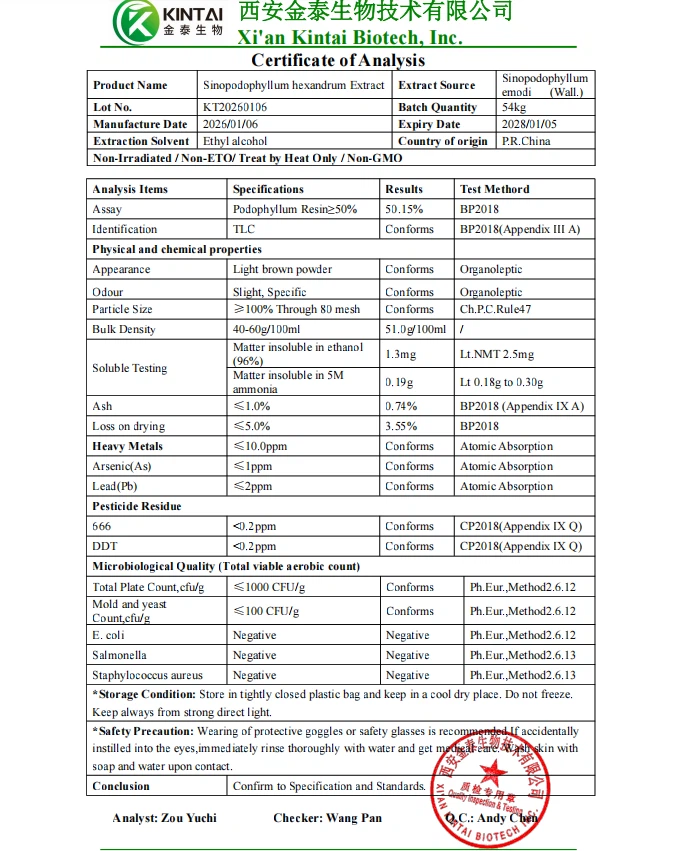
Podophyllum Resin COA
How to Make Podophyllum Resin?
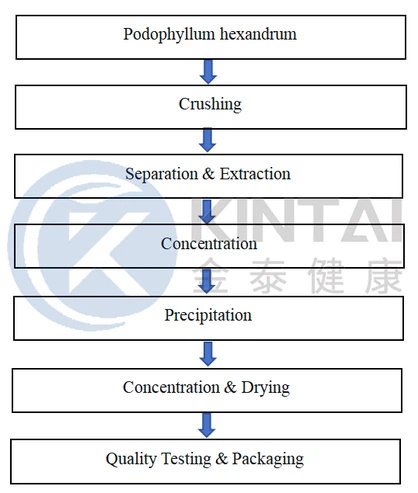
Raw Material Processing and Percolation Extraction
The rhizomes of Polypodium species are pulverized into a 60-mesh powder and placed in a percolation chamber. The powder is moistened with an appropriate amount of ethanol (approximately 480 mL per 1000 g of raw material) and thoroughly compacted. Ethanol is added until the powder layer is completely covered, and the chamber is sealed and soaked for 48 hours. Subsequently, ethanol is added to continue percolation extraction, collecting approximately 1600 mL of percolate, or until the percolate produces only slight turbidity when dropped into water. This step utilizes ethanol as a solvent to dissolve the resinous components in the plant cells.
Concentration
The collected percolate is heated in a water bath and distilled to recover the ethanol, concentrating it into a syrupy, thick liquid. The concentration temperature must be controlled within a low range (not exceeding 80-85°F/approximately 29°C) to prevent high temperatures from causing the resin to darken in color or even destroying the active ingredients.
Water Precipitation
While continuously stirring, slowly pour the concentrated liquid into pre-cooled acidic water (10 mL of hydrochloric acid for every 1000 g of raw material, 10 mL of water). Since podophyllum resin is insoluble in water while other water-soluble impurities are soluble, the resin will precipitate. After allowing the precipitate to settle completely, discard the supernatant and wash the precipitate twice with fresh, cold water to remove residual acid and colloids.
Drying
Spread the wet precipitate on filter cloth and air dry in a cool, ventilated place (preferably during cold seasons). If the resin clumps or forms a lacquer-like hard shell during drying, break it up and grind it in a mortar. The dried podophyllum resin is a light brown to yellowish-green powder; the traditional yield is approximately 3-6% of the raw material weight.
how does podophyllin work?
The main active ingredient in podophyllotoxin resin, podophyllotoxin, inhibits the polymerization of tubulin dimers by specifically binding to the colchicine binding site on cellular tubulin, thereby blocking the formation of spindle microtubules and arresting cell mitosis at the G2/M phase. This irreversible inhibition of cell division preferentially affects proliferating tissues, such as keratinocytes and tumor cells, but has little effect on quiescent cells. Furthermore, podophyllotoxin powder and its semi-synthetic derivatives, such as etoposide, can induce DNA topoisomerase II-mediated DNA strand breaks, further triggering the apoptosis pathway.
This dual mechanism microtubule disruption followed by DNA damage accounts for the potent antimitotic and antineoplastic properties of podophyllotoxin derivatives. Consequently, while crude podophyllotoxin resin is limited to topical use due to systemic toxicity risks, its purified derivatives have become cornerstone chemotherapeutic agents in the treatment of small cell.
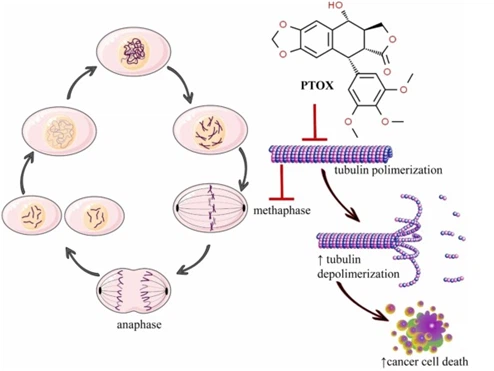
podophyllin vs imiquimod
Podophyllin and imiquimod are both commonly used topical medications for treating condyloma acuminata, but their mechanisms of action and clinical applications differ significantly. The main component of podophyllin, podophyllotoxin, inhibits microtubule polymerization, blocking mitosis of HPV-infected epithelial cells, leading to necrosis and shedding. Imiquimod, on the other hand, is a small-molecule immunomodulator that activates the body's immune response to clear the virus, without direct cytotoxic effects. Regarding efficacy, studies show similar clearance rates with no statistically significant difference, but imiquimod has a slower onset of action, with a median clearance time of 8-12 weeks, while podophyllin preparations typically take effect within 2-3 weeks.
In terms of safety, imiquimod has milder local reactions than podophyllin, such as burning and pain, and can be applied to larger lesions because it does not damage normal tissue. It is important to note that podophyllin has definite teratogenicity and can be absorbed through the skin, causing systemic toxicity; therefore, it is strictly contraindicated in pregnant women and the application area must be strictly controlled.
podophyllin vs podophyllotoxin
Podophyllin and podophyllotoxin differ significantly in nature, composition, efficacy, and safety. The former is a mixture, while the latter is a purified single active ingredient. Podophyllin is a resinous crude extract from the rhizomes of plants in the Podophyllum genus. It has a complex composition, containing podophyllotoxin, flavonoids, and other substances. The content of the active ingredient, podophyllotoxin, is typically only 20%-40%, and varies depending on the plant source and batch. Podophyllotoxin, on the other hand, is a crystalline compound purified from resin using modern separation techniques, achieving a purity of over 90%. It is a single component with controllable quality.
What are podophyllin benefits?
podophyllin for warts
The main efficacy of podophyllin in treating warts (especially condyloma acuminata) lies in its active ingredient, podophyllotoxin, which inhibits microtubule polymerization, blocking mitosis in HPV-infected epidermal cells, causing them to arrest in the G2/M phase and eventually necrose and slough off. In clinical applications, a 10%-25% concentration of podophyllin tincture or solution is typically applied to a small area of the wart by a professional healthcare provider, avoiding contact with surrounding healthy skin. This medication is highly effective for soft, non-keratinized condyloma acuminata; the standard treatment regimen usually involves application 1-2 times per week for 3-6 weeks, achieving a lesion clearance rate of 40%-80%.
podophyllin for skin tags
Regarding the efficacy of podophyllin for skin tags, its application is primarily based on empirical use. Some medical literature lists it as one of the drugs that can be used to treat skin tags. Its mechanism of action lies in its antimitotic effect, which allows it to bind to tubulin and inhibit microtubule formation, thereby disrupting rapidly proliferating cells. However, skin tags are benign tumors composed of collagen fibers and loose connective tissue, and their cell proliferation activity is far lower than that of viral warts such as condylomata acuminata. Therefore, the theoretical therapeutic effect is limited. Currently, the official indication for podophyllin in dermatology is limited to the treatment of condylomata acuminata, a specific type of genital wart.
podophyllin use
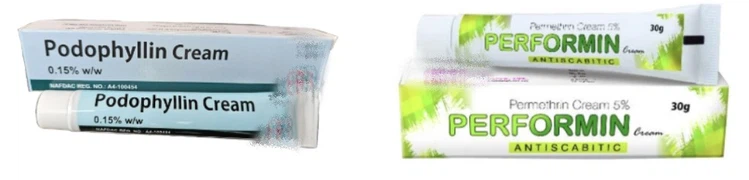
podophyllin ointment/podophyllin cream
The application of podophyllotoxin resin in creams or ointments primarily aims to deliver the active ingredient to the affected area by providing a uniform and easily spreadable carrier. Simultaneously, the semi-solid formulation's occlusive effect increases stratum corneum hydration, thereby promoting local drug penetration. Podophyllotoxin ointment is included in China's medical insurance program as a first-line topical prescription drug for treating genital warts. The podophyllotoxin cream formulation is purer, allowing patients to self-medicate at home for a limited course of treatment, and its local irritation and systemic absorption risks are significantly lower than those of crude resin formulations.
Podophyllum resin serums
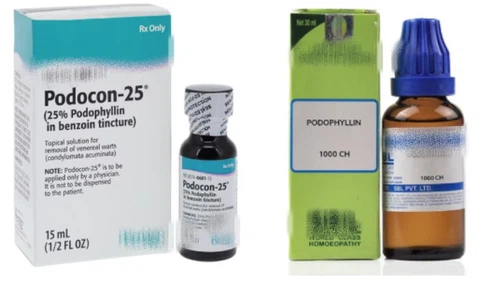
The core application of Podophyllum resin serums formulations lies in its use as a keratolytic agent for the topical treatment of various warts, especially condyloma acuminata. A representative commercially available product is "PODOFILM," a 25% concentration of podophyllum root resin solution, which is a brownish-red liquid. Its clinical application fully embodies the characteristics of Podophyllum resin serums formulations: through precise local application, the cytotoxic and antimitotic effects of podophyllum resin directly destroy and remove the warts.
podophyllin dose
According to the official product information and authoritative clinical references, as listed in the DailyMed database under the National Institutes of Health (NIH), the standard formulation of podophyllin is a 25% solution, and it must be applied by a professional physician in an examination room. Patients are strictly prohibited from using it themselves. Specifically, the physician must first clean the affected area, then use a special applicator to apply a thin layer of the solution to the surface of the wart, taking care to avoid contact with healthy tissue.
podophyllin cream side effects
While the safety of podophyllotoxin resin is manageable under proper application, improper use can lead to serious consequences. The core risk lies in the potent cytotoxicity of its active ingredient, podophyllotoxin, especially when applied over large areas for extended periods or to broken or bleeding mucous membranes. Systemic poisoning typically occurs several hours after application, with early symptoms including nausea, vomiting, abdominal pain, and severe diarrhea. The nervous system is the most vulnerable, potentially developing into axonal sensorimotor neuropathy, manifesting as numbness, tingling, and weakness in the hands and feet. In severe cases, sensory ataxia, loss of tendon reflexes, and even autonomic dysfunction may occur.
where can i buy podophyllin?
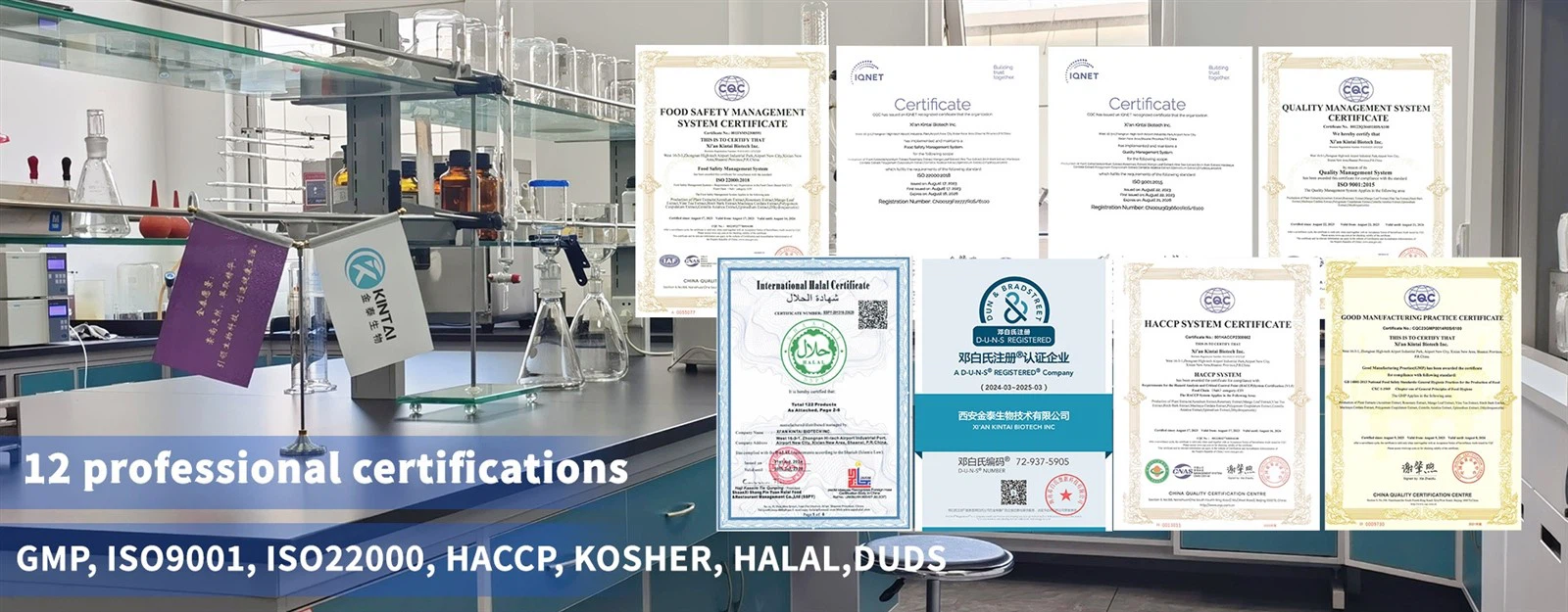
We highly recommend Healthkintai® podophyllin resin. This product uses carefully selected raw materials and standardized extraction processes to ensure stable podophyllotoxin content in each batch, guaranteeing high purity and consistency between batches. Our company strictly adheres to ISO and GMP quality management systems and provides complete Certificate of Analysis (COA) test reports, ensuring that heavy metals, solvent residues, and microbiological indicators all meet international pharmacopoeia standards. Choosing us will give you professional technical support, flexible customization services, and competitive pricing. Contact us at info@kintaibio.com.
Hot Tags: podophyllum resin podophyllin powder, China podophyllum resin podophyllin powder manufacturers, suppliers, factory, Oxymatrine Powder, Lappaconitine Hydrobromide, Bitter Almond Extract Amygdalin Powder, Capsaicin Powder, Gentiopicroside Powder, Quercetin Powder


